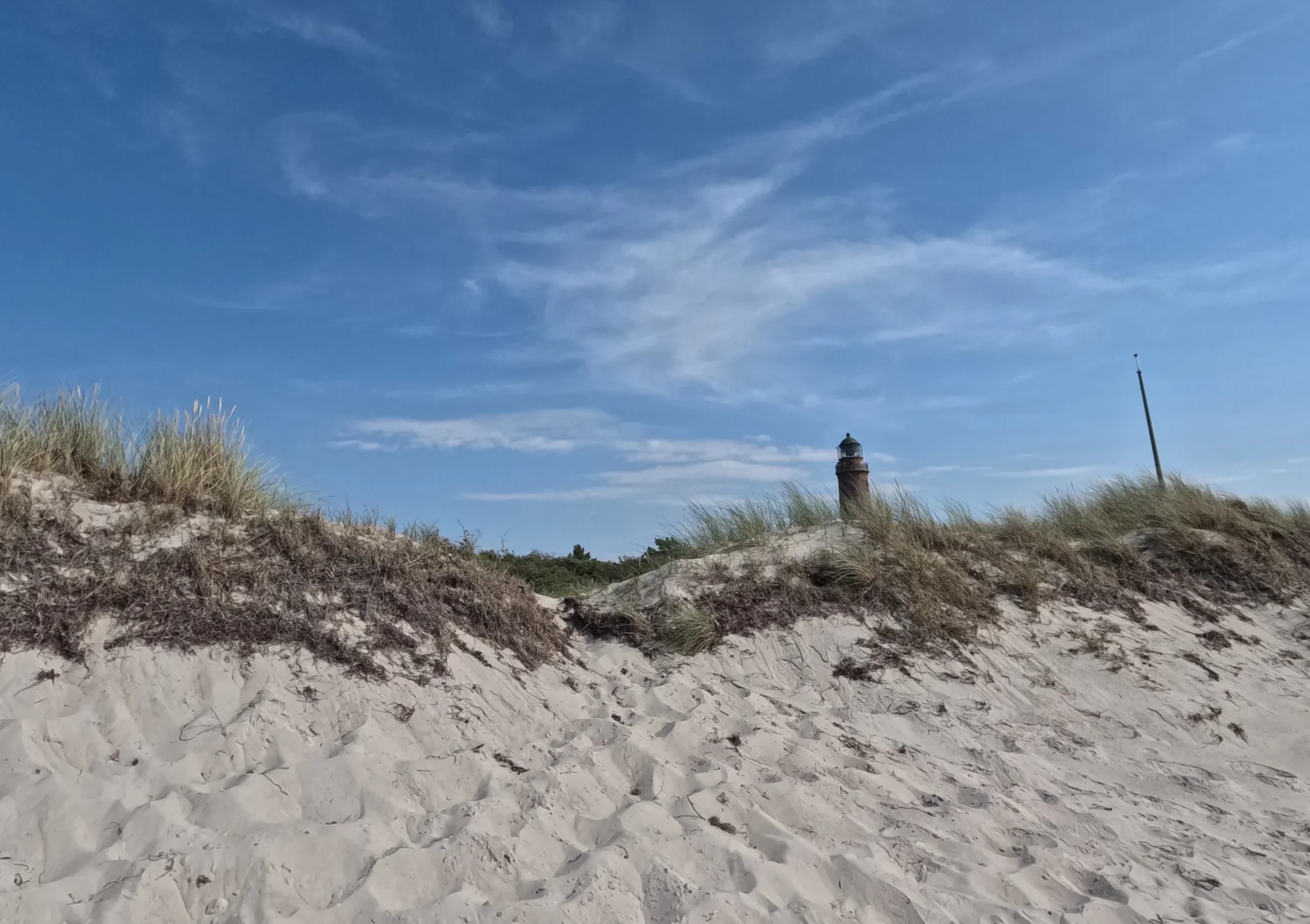
Why Bikepack Germany’s Baltic Coast?
During the summer, the Baltic and North Sea Coasts are Germany’s main holiday destinations. While the rest of the country is suffering from heatwave after heatwave the North stays cool even in July, making it perfect for not just relaxing at the beach, but also physical activities, such as Bikepacking. It is in fact so cold, that just normal summer camping equipment is not enough if you are unlucky, as night temperatures can easily drop below 10°C.
Another major advantage of the North in terms of bike riding is the flat landscape. Although you occasionally stumble across a slightly hilly area, the overall countryside is extremely flat, making it perfect to cover long distances.
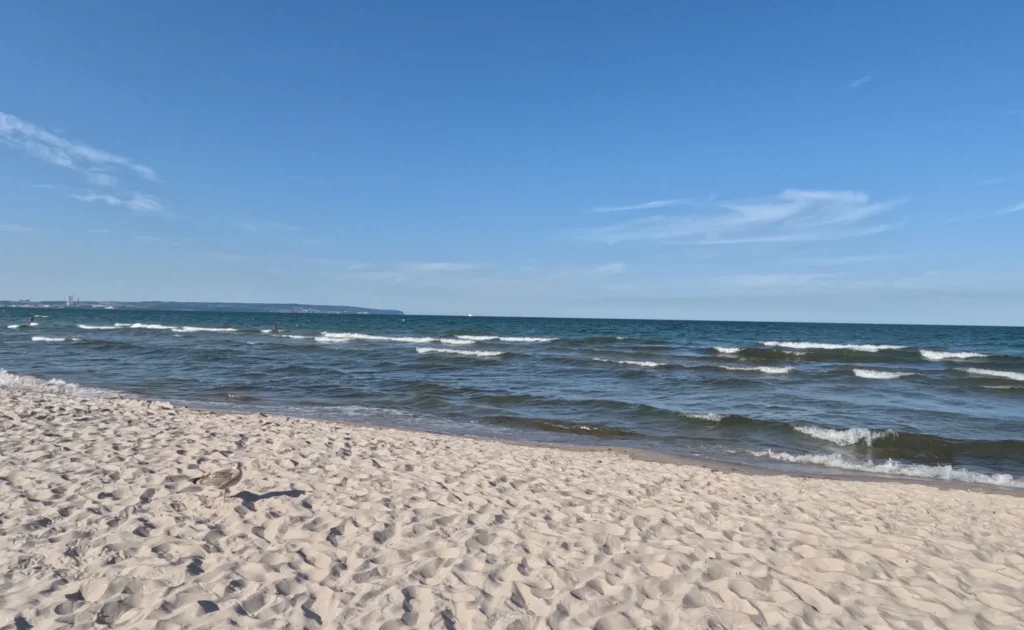
The Baltic Coast in my opinion offers better conditions for Bikepacking overall compared to the North Sea Coast. The countryside is far less populated allowing you to bike through open landscapes away from human settlements more often. The coast is also not under the influence of tides, as the Baltic is only connected to the North Sea through a tiny channel between Denmark and Sweden. Therefore you can find picturesque sandy beaches for almost the entire length of the coastline. Something unheard of around most parts of the North Sea Coast.
This trip is practically the continuation of my previous adventure from Dresden to Greifswald, so if you are interested in that, feel free to check it out.
What Equipment do you need?
After multiple trips around the federal state of Mecklenburg-Vorpommern, I would recommend you to make sure that you bring the following:
3 season tent and sleeping setup
- waterproof trekking tent
- 5°C sleeping bag
- Air mattress / sleeping pad with an R-Value of at least 2.5
clothing in layers
- something light to wear, when the weather is good
- clothing for rainy days (not uncommon)
- thermal layers for evenings and nights
Repair Equipment
- tire repair kit or spare tire
- air pump
- multitool
- chain repair kit
- small bottle of chain oil
This is of course not everything you might need, but I guess, this would be what some people might ignore in the Summer or just forget, when packing their bags. I already had multiple nights, where day temperatures hovered around 26°C but night time temperatures came down to around 10°C. Times during which I was glad, that I brought the thicker sleeping bag and warmer clothes, although it meant that I was quite warm during the night in other places further south.
I highlighted the Repair Equipment, as I had an issue with my back tire on my last trip there. In that instance I was fortunately near a bike shop, but I still had to push for around 1,5 hours before I got there. Had this happened somewhere in the countryside, it could have very easily been an entire day until I would have been able to get it fixed, as after this shop there was none along my route for the next 70 kilometers. Mecklenburg-Vorpommern is truly empty.
Wildcamping along the Baltic Coast
Wildcamping is officially not allowed
Yeah, it’s a bummer. Compared to the Nordic Countries nearby, rules here are much more strict. In both Schleswig-Holstein and Mecklenburg-Vorpommern, wildcamping is illegal. You might hear about rules saying otherwise, but officially, this just means that wild camping is allowed on ground not privately owned and also not part of any kind of nature preserve. There aren’t any of such „wild“ areas as Germany is too densely settled for this to exist. What it means is, that if you ask the land owner and get their permission, you can use their land and camp legally.
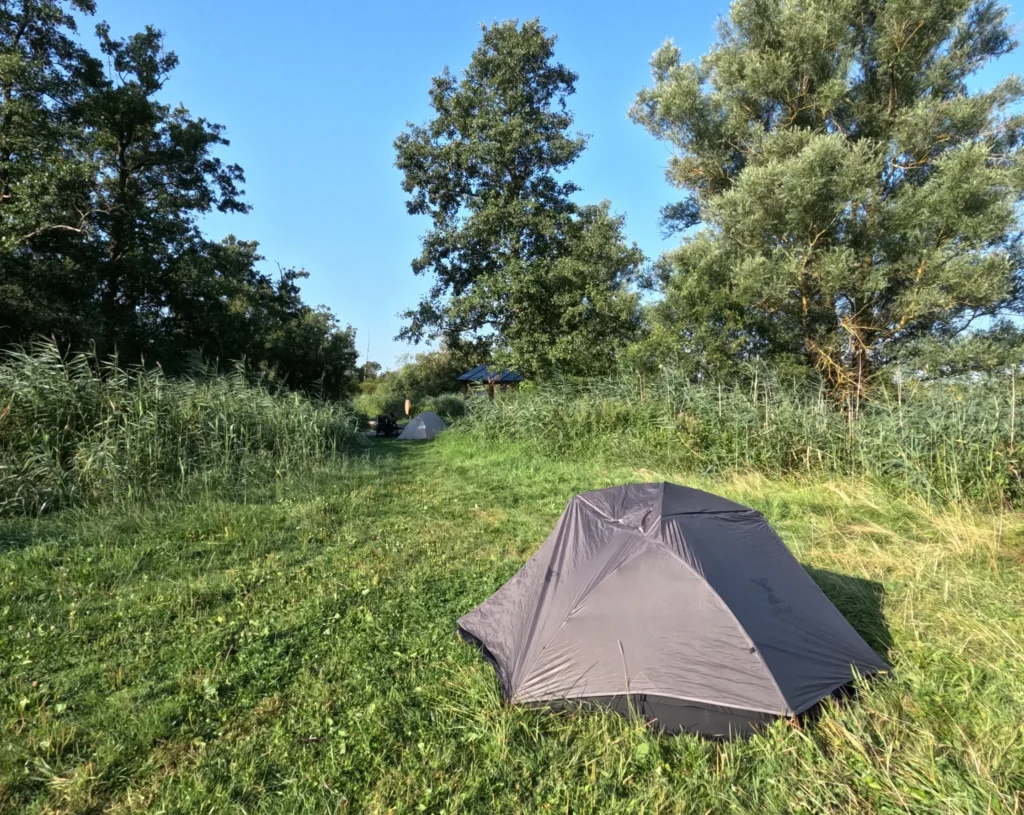
If you do camp in the wild illegally, than a wise advice would be to stay away from touristy areas. Forget about pitching your tent directly at the beach, even when it seems secluded. There are a lot of people walking the beaches late at night or early in the morning and some of them will think you are littering or destroying nature and call the police on you. Therefore, it is best in my opinion to ride a few kilometers from the coast into the countryside or camp at the „Bodden“. These are shallow coastal lagoons separated from the open sea by narrow peninsulas and barrier islands. Here, much fewer people live directly at the waterfront and you will be able to find a secluded spot more easily while still sleeping right next to the beach.
There do also exist a number of free spots, where pitching your tent is generally allowed. They range from small secluded camp sites for kayaking to small private locations with welcoming owners. Some sites are also officially private, but owned by the local council, where permission is granted without asking prior to pitching the tent. This list might be incomplete, so if you know more such places, feel free to contact me, so I can fill in the blanks.
A 3-day Itinerary
Route Overview
The route we chose for this trip starts in Greifswald, as I did it together with my girlfriend, who lives there. The plan was to ride through a mix of landscapes with the first day going through rural Pommerania, the second along the Darß Peninsula and the third crossing the island of Rügen. I came to like this mix very much, as each day had something new and exciting to look forward to.
As the trip is not a full circle we took the train back to Greifswald with our bikes. If you are fit enough, you can also ride your bike back to Greifswald after arriving in Binz, using the ferry at Stahlbrode/Glewitz.
Day 1: Rural Pommerania
Greifswald – Grimmen – Bad Sülze – Ribnitz-Damgarten – Pantlitz
Length: 94,3 km
Duration: 5:36 h
Link: Day 1: Discovering Rural Pommerania | Fahrradtour | Komoot
Start off in Greifswald, a beautiful university city with a lively Old Town. An ideal start point would either be the market square or the coastal part of the city at Wieck. Head out of the town and into the countryside. Almost immediately you will be transported into a sparsely populated landscape, the reality of how 90% of Mecklenburg-Vorpommern looks like. Many kilometers between villages, lush green fields and empty roads as far as the eye can see. The only major road you will cross here is the highway towards Rügen, where, especially in the summer time, a lot of holiday traffic is to be expected. Apart from that, I think we saw about as many cars, as we encountered tractors.
The first bigger city you will reach is Grimmen. Although it has a small and pretty Old Town, not much was going on there, when we visited, which was on a Saturday. Still, it is the only major town between Greifswald and Ribnitz-Damgarten, so if you need to buy any supplies, do it here.
After roughly 50 kilometers, you will reach the Recknitz River Valley. The part of the river this tour passes along is almost entirely a Nature Preserve and the highlight of the day. The cycling path here is perfectly straight and offers serene views over the green pastures and swamps to the right. We really enjoyed this part and will definitely do it again in the future. Here you really get an idea of the beautiful spots MV has to offer far away from the major tourism hot spots.
Having reached Ribnitz-Damgarten, enjoy your well-earned break at the Bodden. We arrived at 6 pm and the sun was already quite low. Many Holiday guests were around having dinner and the promenade was quite lively. Our rest there was short though, as we decided to stay the night at the Wasserwanderrastplatz Pantlitz, a bikepacker’s dream. The spot is situated right at the bank of the river Recknitz with a small wooden jetty and a covered wooden seating area. You can get some water from the nearby church for cooking, but apart from that you have to bring everything yourself of course.
Day 2: The Darß Peninsula
Pantlitz – Ribnitz-Damgarten – Darßer Ort – Zingst – Barth – Zühlendorf
Length: 88,0 km
Duration: 5:32 h
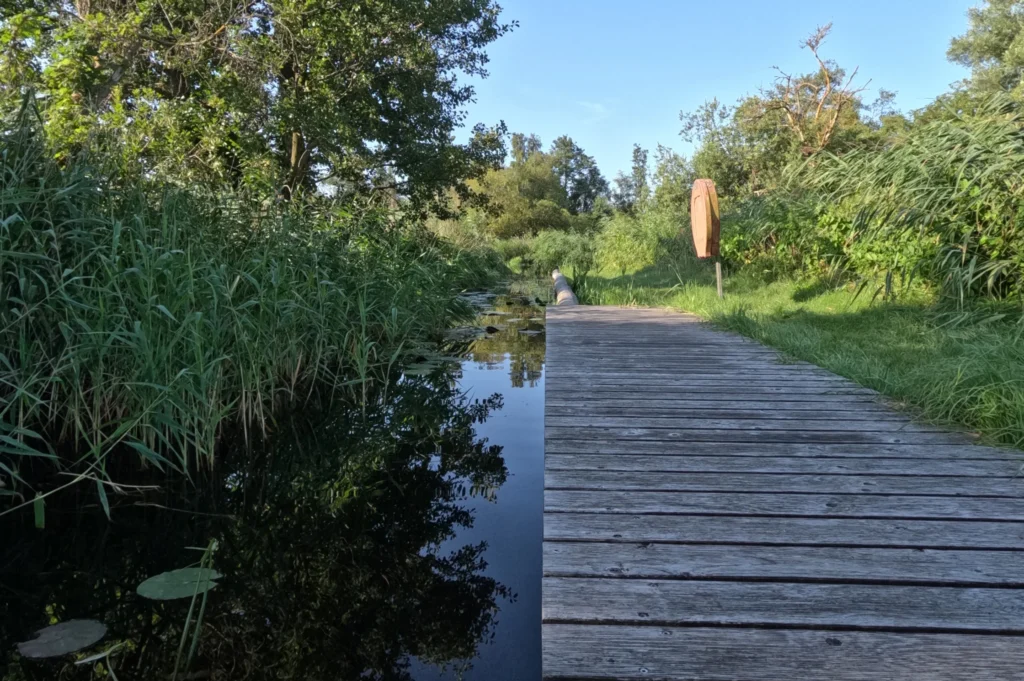
From your campsite at the Recknitz River, head back to Ribnitz-Damgarten and begin your journey across the Darß. This peninsula, whose official name is „Fischland-Darß-Zingst“, is a pensinsula created by humans. Originally it was three separate islands called Fischland, Darß and Zingst, but over time humans joined them together by sealing the floodwater channels. Today it is a famous summer holiday destinations for beach tourism, as almost the entire western and northern coasts are made up of wide, sandy beaches.
Ride towards Dierhagen and join the main cycling route towards the peninsula. From here on you will be sharing the path with a lot of tourists doing day trips on their bikes, a complete 180° from the empty cycling routes the day before. Follow the signs towards Ahrenshoop and from there towards Darßer Ort. Once you reach it head to the beach and spend a couple of hours there if you can spare it. The „Weststrand“ or west beach is supposed to be one of the most beautiful beaches in Germany and I can see why. It is situated right in the National Park, surrounded by pine and oak trees in a landscape without any human interference.
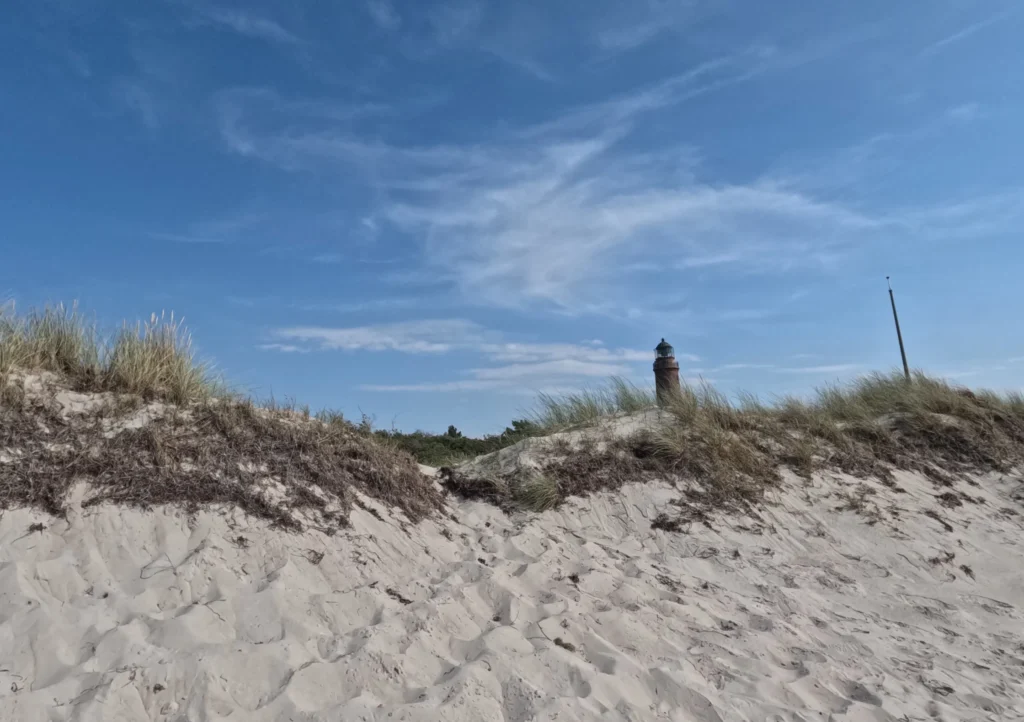
Having spend some time at the beach, it was time for us to press on, because on the peninsula, there are no free campsites anywhere (at least none that we could make out on a map) and pitching your tent in the National Park is strictly forbidden and enforced by park rangers. Thus we head to leave for the night.
Head over to Zingst and from there cross the Bodden towards Barth. This part of the route is very beautiful. Separated cycling infrastructure and beautiful views over the sea all the way. Once you reach Barth ride through the Old Town and follow the cycling signs towards Stralsund. Like this you will be following the official Baltic Sea Cycling Route, which is of excellent quality either by being completely separated from traffic or using roads, that almost no car would ever take. Stock up on supplies on Barth, it is the last supermarket before the campsite.
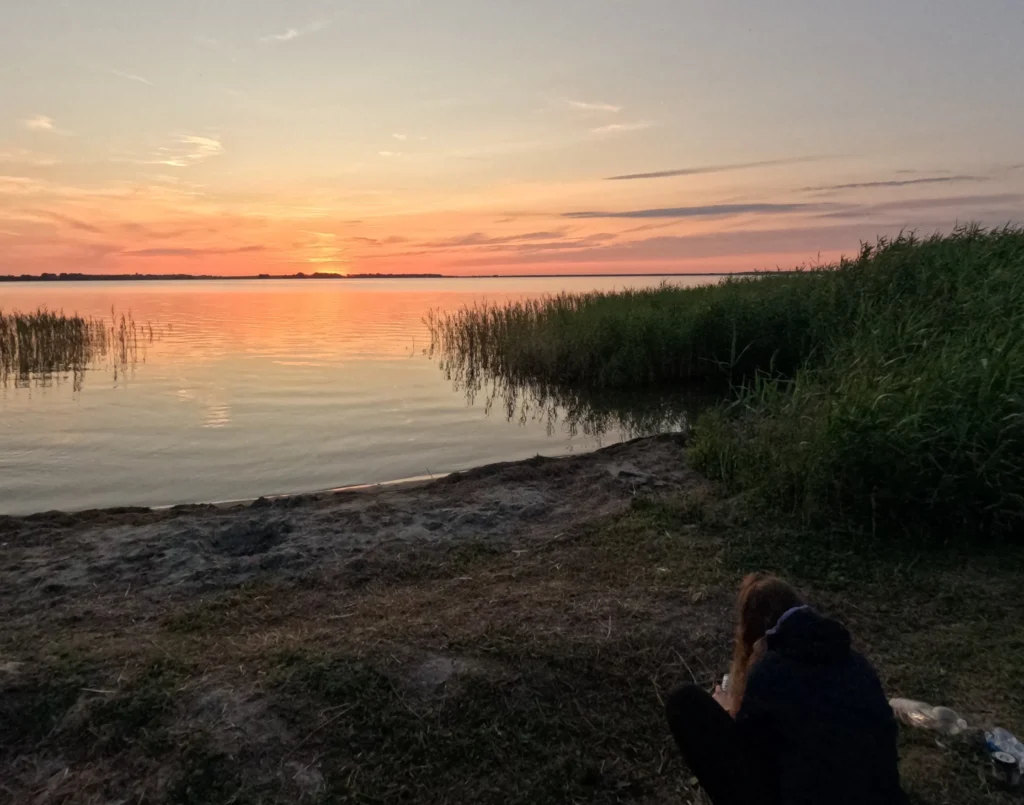
Today we chose to camp at the Zühlendorf Harbor. We called the owners, who allowed us to stay there the night and we were glad that we had chosen them. We could pitch our tent directly by the beach and head the most amazing sunset. We had a bit of doubt, whether this place would be too crowded because it sit’s right on the official cycling route, but we were pleasantly surprised, that there was no one passing by after around 8 pm anymore, while the first person only came at around 8 am, meaning we had the place all to ourselves.
Day 3: The Island of Rügen
Zühlendorf – Stralsund – Gartz – Putbus – Binz – Lietzow
Length: 92,6 km
Duration: 5:38 h
The last day begins, as the one before ended. Riding along the Baltic Coast Cycling Route, you can enjoy views of the Bodden on your way to Stralsund. You will have them almost to yourself, as we only met a few other Bikepackers here right until we entered Stralsund. I guess not many people do this „in-between“ stretch.
This famous town got it’s distinct character from the times of the Hanseatic League, a medieval alliance of trading cities, which made members very wealthy. If you have some time to spare, stop in the harbor for Fischbrötchen (fish on bread). We tried some of the best fish we ever had on the Baltic Coast right here. Cross the drawbridge across the water onto the Island of Rügen. Keep in mind, that it might be up letting ships pass, which can result in waiting times of up to 20 minutes.
On Rügen, the character of the landscape changes a bit. It feels more rural, a bit more laid back and it is also consistently hilly across the entire route from here, though I was prepared for that having done a trip into Czechia two weeks prior. Cross the small towns of Gartz and Putbus, before descending the „mountains“ into Binz. This city is famous for it’s luxurious, upscale hotels and beach establishments. The facades alone are worth checking out the city for. Stop quickly at the pier and walk to the front. From here you have perfect views of the kilometer-long beach cornered by massive cliffs on both ends. The beach here was the fullest I have ever seen ever, so my advice would be to cycle a bit along it into Prora and go for a swim there instead to avoid the masses.
Prora is famous as the „Nazi Resort“. During the 1930’s they tried to build the world’s longest building with a total length of 4,5 kilometers, intended as a seaside resort with capacity for over 20000 guests at a time. Nowadays the building got turned into apartments and luxury hotels, profiting from it’s pristine location right at the beach. The tour ends a short ride beyond Prora at Lietzow, where you can catch the train back to the mainland.
Hidden Gems along the Way
„Café Wunder Bar“ in Bad Sülze
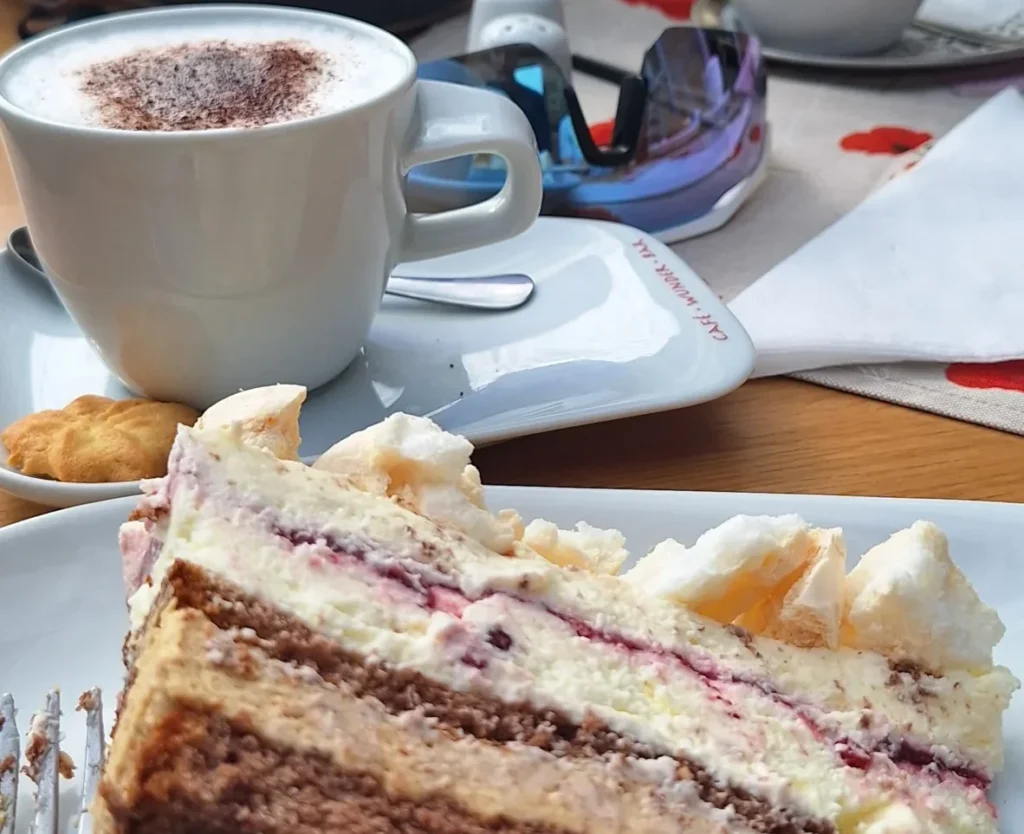
This café has an amazing terrace near the Recknitz cycling route, on which you can enjoy amazing coffee and cake. Watch out: the portions here are pretty big.
„Ribnitzer Fischhafen“ in Ribnitz-Damgarten
Perfect for trying authentic Baltic Coast fish. Either as a Fischbrötchen or just the fish itself.
„Mühle Ahrenshoop“ in Ahrenshoop
A café, which sit’s inside of an old windmill. They have a beautiful garden to relax in and enjoy some cake.
Supermarkets on the Peninsula
If you come here on a Sunday, you are in luck: Supermarkets here are allowed to stay open all week including Sundays. I guess they have a special tourist status excluding them from the Sunday closing rule in Germany.
„Fischhalle“ in Stralsund
Another fish shop not only offering normal fresh fish but every thing from smoked fish to cured fish to marinated fish and beyond. It was the first time for me trying „redcurrant herring“, a mix of fishy and sweet stuffed inside a bread roll.
Would we do it again?
Absolutely, the conditions for Bikepacking here are just too perfect. We will probably go more towards Northern Rügen or Usedom next time. Hopefully you will get to read about it on this blog!