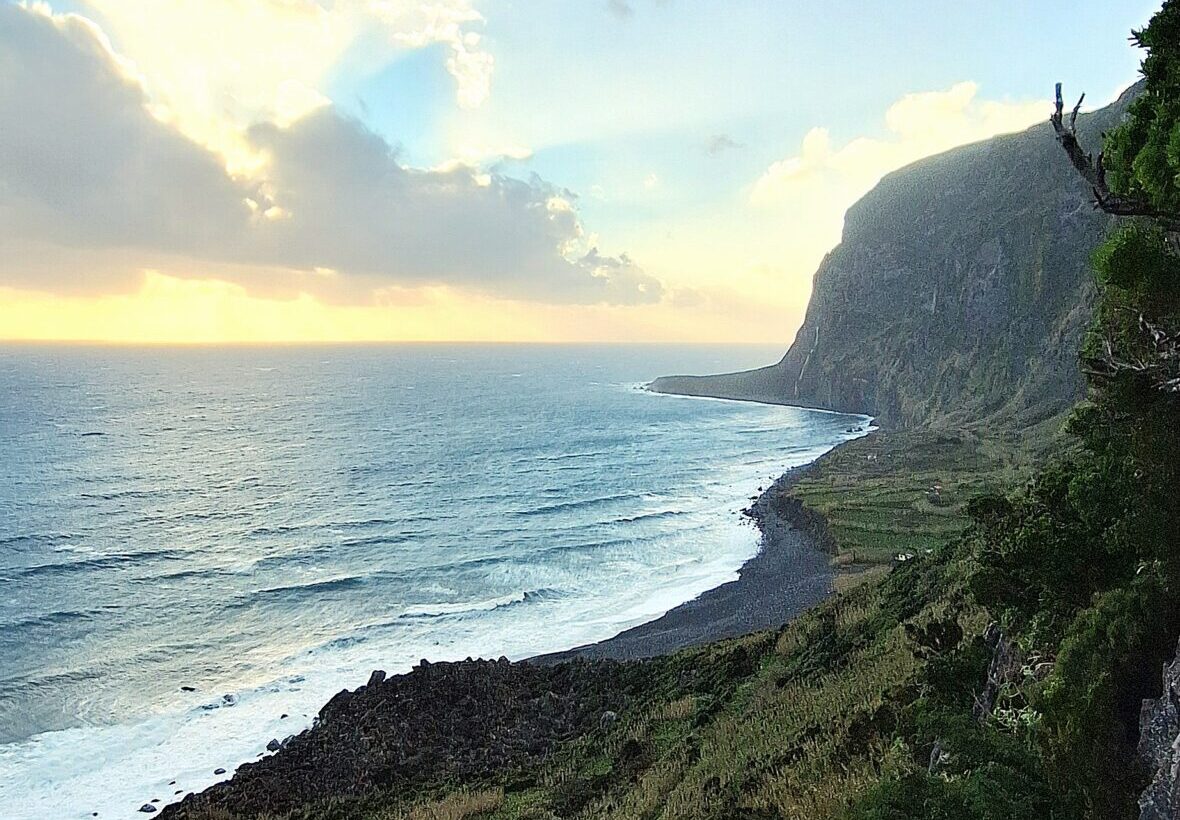
Where is Flores?
Flores Island is part of the Azores, an island chain in the mid-Atlantic Ocean belonging to Portugal. The overall area can generally divided into the Eastern Group, the Central Group and the Western Group. In terms of size and population the biggest and most known island is Sao Miguel in the Eastern Group, which is most easily reachable from the mainland and has many international flight connections in and out. The central group on the other hand consists of the biggest amount of islands and even holds Portugals highest mountain the Mt Pico.
Smallest of the three in turn is the Western Group, which consists of only Flores and the smaller neighbouring island of Corvo. Combined they only have an area of 162,2 square kilometers and a population of 4184 people, most of which reside in Flores. Additionaly, it is not only the smallest group of islands but also the most isolated, as they sit around 220km from Faial, the next island that is a part of the Central Group. Portugal’s mainland is around 1850 kilometers , Canada’s is 1900 kilometers away. This isolation makes the island harder to reach, as it requires multiple transfers to get there.
Nonetheless, Flores is in many aspects the gem of the Azores. Untouched nature, breathtaking views and a far quieter easy way of live. Compared to the other major islands, it has no big supermarkets, not a lot of cars and overall is just a lump of villages on a picturesque green little rock poking out of the rough Atlantic Ocean.
If you choose to come here, it must be clear to you, that almost every activity you can do involves hiking!!! The hikes are not super demanding but if you cannot physically hike through steep terrain and rough forests, Flores is probably not the destination for you.
How to reach the island
To reach the island you will have to make at least one stopover depending on the the season and where you come from. During the summer, daily flights connect Flores with Terceira, Horta and Ponta Delgada, where most tourists arrive to the Azores. Additionally, there is a once daily flight to Corvo and back. In the winter the situation looks different. The direct flight from Ponta Delgada does not operate and other flights are prone to cancellation because of strong winds and bad weather. Travelling to Flores between November and February is therefore more difficult and risky.
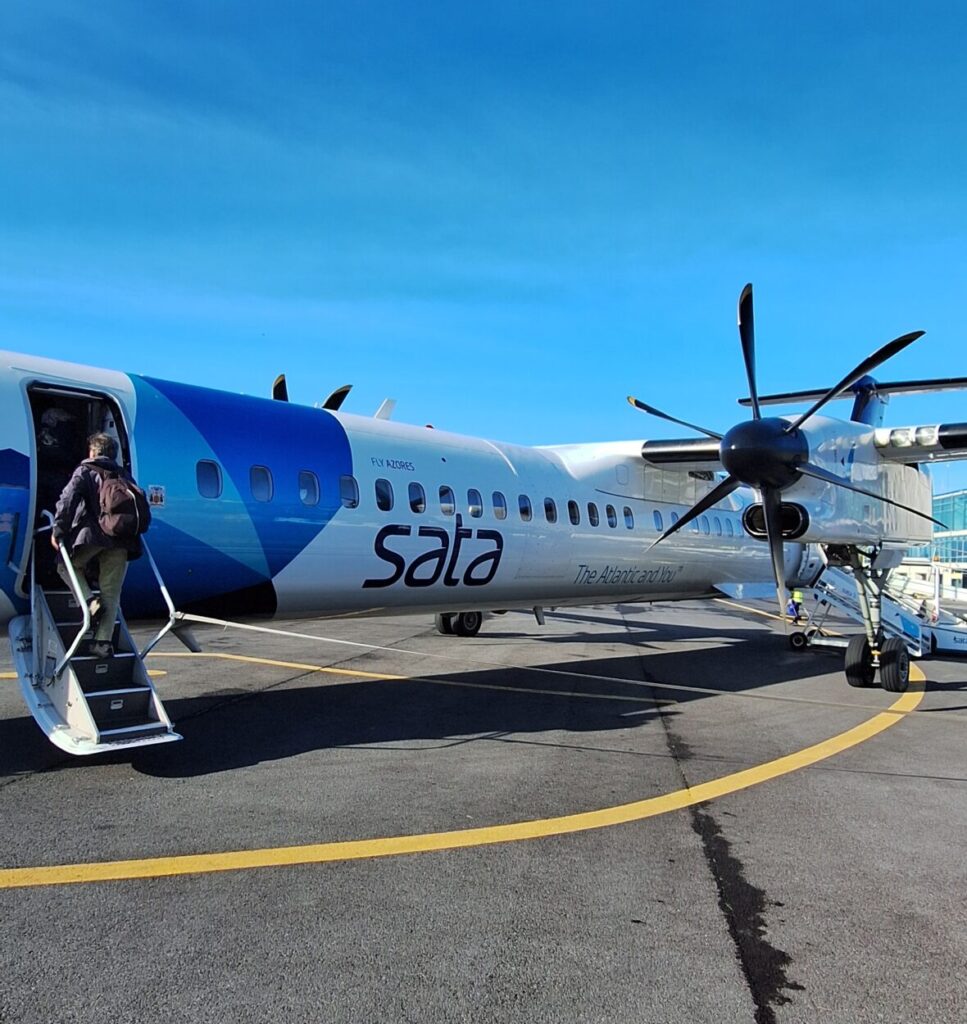
There are no ferries between the Central group and the Western group. Your only option is flying. In the summer there is a ferry connecting Flores to Corvo, if conditions permit. In the winter this service is suspended entirely, as high waves and strong winds are battering the island almost constantly and few tourists visit.
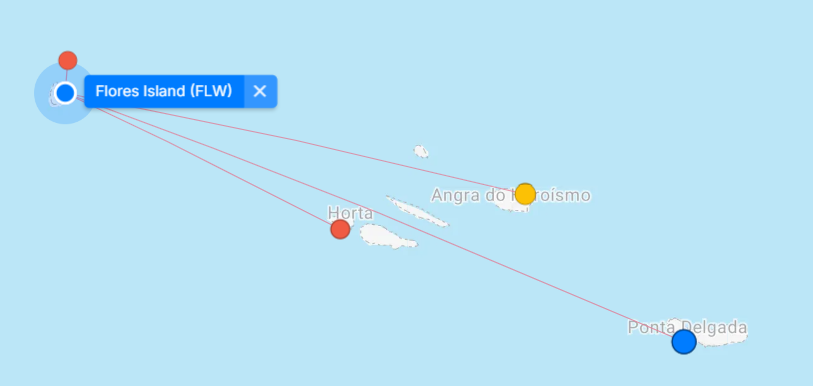
During the summer (March to October)
During the summer, the easiest route you can take is a direct flight to Ponta Delgada, reachable from Paris, Lisbon, Vienna and many more, and then head on with a connecting flight to Flores. Procedures at the airports in the Azores are fast and distances are short. You will most likely reach your connection even if it is only 15 minutes or less. Make sure to book in advance. Especially the inter-island planes are selling out fast, as many tourists visit at that time.
During the winter (November to February)
In the winter, the only places in Europe where flights to the Azores originate from, are Lisbon, Porto and Faro. The ideal route here is to fly from Lisbon to Horta and take a connection from there to Flores. If you fly to Ponta Delgada first, it will be two additional flights as you have to fly to either Terceira or Horta and wait for the next connection. To make up for that, you will have no issues getting a last-minute ticket, as the planes are rarely sold out. At the time we visited, there were tickets available for every day the flight operated and the planes were barely even half full.
We did the Route from Ponta Delgada to Flores via Horta in January and considering, we did not have a time limit on our trip back then, it was alright, although I would not do it on a shorther holiday as you will spend a lot of time transiting with the risk of having to wait out bad weather (which can sometimes suspend flights to Flores for multiple days). We had a mid-day flight to Horta on Day 1 and another mid-day flight to Flores on day 2, with one night in Horta in between, as there was no other combination of flights at the time of booking. While we were on Flores flights were suspended for 4 days, so we were really lucky, that our itinerary worked out like that.
You can combine a trip to Flores with a week in Sao Miguel and a couple days on Faial and Pico, as I explained in my guide about Backpacking the Azores. Just going to Flores alone is not worth the huge effort in my opinion.
Where to stay
Flores is not a big island. The main villages are Santa Cruz das Flores in the East, Ponta Delgada in the North, Lajes das Flores in the South and Faja Grande in the West with the middle of the island being a high mountainous plateau. If you rent a car at the airport, any of these villages will be a good fit, as the longest routes on the island are barely 45 minutes. We stayed in the Casa Citrina in Lajes with a wonderful French family. They operate a small farm and have a beautiful house surrounded by nature on all sides. The famous Faja do Lopo Vaz is reachable on foot. I can highly recommend them.
For the best views stay in Faja Grande. It sits right next to the black lava rock beach with steep, dramatic cliffs to one side and the wild Atlantic to the other side. In my opinion, there are no bad spots in terms of accomodation but if I were to come back I would stay here.
How to get around
Driving on the island is doable, but can be hard if you do not drive regularly. There are few cars on the road and all roads are asphalted, but they are narrow and wind through mountains and valleys. As Flores is basically one big mountain sticking out of the Atlantic, this is to be expected.
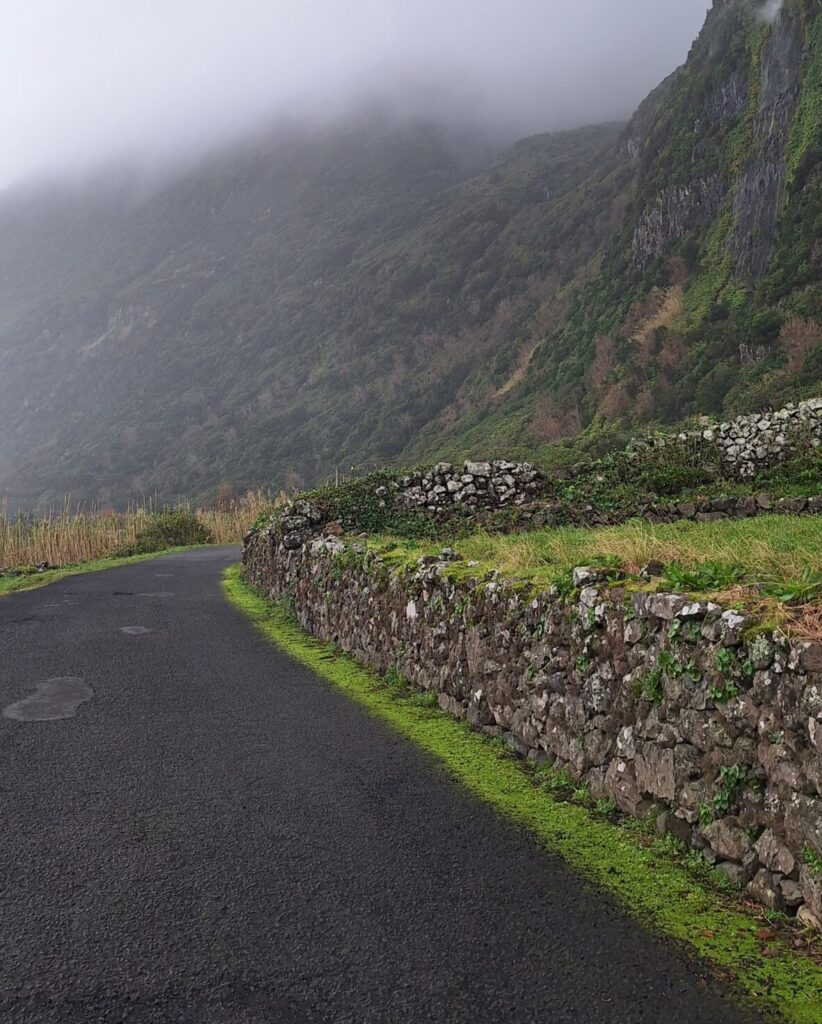
The only downside for any backpacker is the lack of public transportation. There are bus services, connecting Santa Cruz with all the other villages, but there are few connections each day. The best way to see the island therefore is to rent a car. If you really cannot afford to rent, a good option in my opinion would be to stay in an accomodation in Santa Cruz and use a combination of public busses and hitchhiking to reach your destinations. We hitched rides multiple times during our Azores trip and it was always very easy to get a ride.
Best time for a trip to Flores
The best time to visit the island in terms of nature is in the summer. Flowers are blooming everywhere and temperatures hover around 25°C with regular flights and good weather being more likely. Coming during this time will also allow for an easy visit to the neighbouring island Corvo, as the ferry operates in such a way, that you can get on it in the morning, explore during the day and head back to Flores in the evening.
The downside to travelling in the summer months are the costs. Prices surge dramatically, as the island is not able to handle a huge amount of tourists. There can be times, where there are no beds and rental cars left, so you have to book far in advance. Expect to pay around 15€ per day for a car during the off season and at least 90€ per day for a car in summer.
If you are on a budget, my recommendation would be to come to Flores in the winter. You will not have any flowers as the name suggests, but everything will be lush green, with temperatures perfect for hiking and enjoying nature. Winds and frequent rain will be your daily partner but this was absolutely fine, when we visited. Generally it rains every day, it is cloudy everyday and it is sunny everyday haha. Weather changes drastically and you will always have some good periods to plan your day around. You will also have the island to yourself at that time of year. We barely saw any other tourist during the 7 full days we were there.
The downsides in turn are riskier flight connections due to storms, empty supermarket shelfs during times, when the supply ships cannot reach the harbor and closed restaurants in large parts of the island. Especially in Faja Grande, there seemed to be quite a lot of tourism infrastructure, but everything was closed during January and the village felt eerily empty.
5-day Itinerary
Day 1
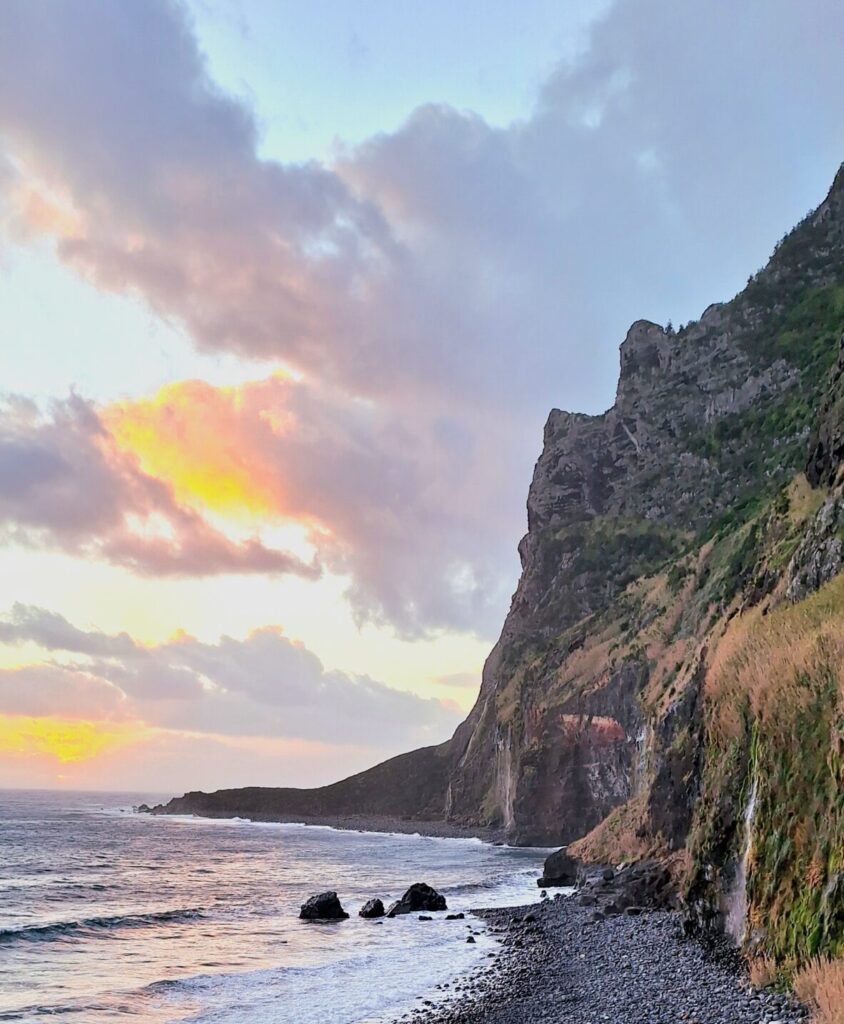
After having arrived in Flores, get your rental car and head to your accomodation. Enjoy the evening by walking the PR04 to the Faja do Lopo Vaz. This hike is short and punchy, as you decend roughly 200 meters down a cliffside and end up at a secluded beach with black sand from where you can watch the sun slowly setting. Make your way back up just in time before it gets completely dark. Plan roughly 2 hours for the entire hike with stops.
Day 2
On your first real day on the island, start with a true highlight. Drive to the village of Lajedo and park your car by the village entrance. Todays hike PR02 will lead you along the Western Coast from Lajedo to Faja Grande. It is a one-way hike, but you can take the bus back to your car in the end.
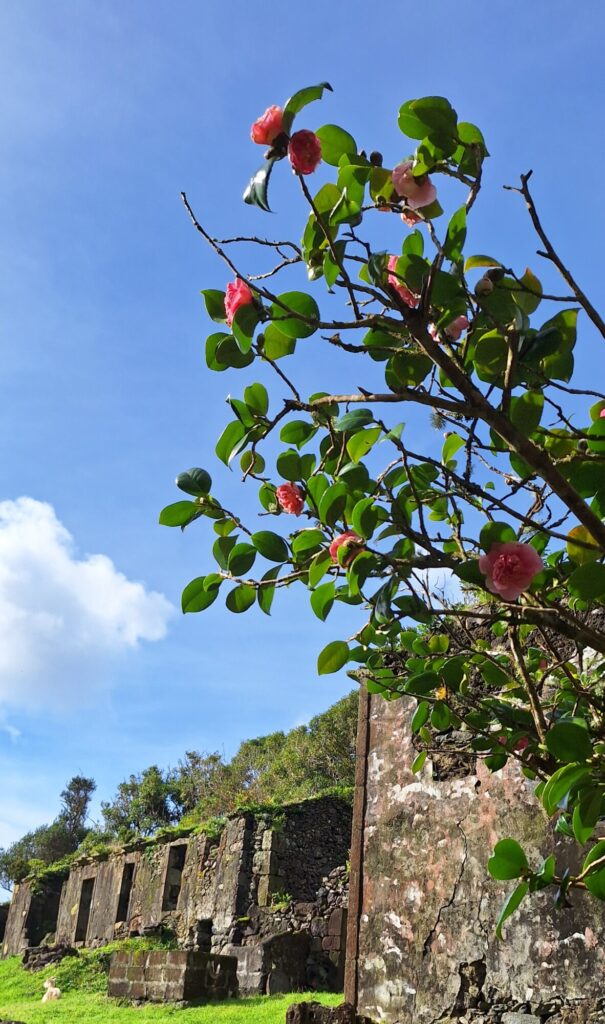
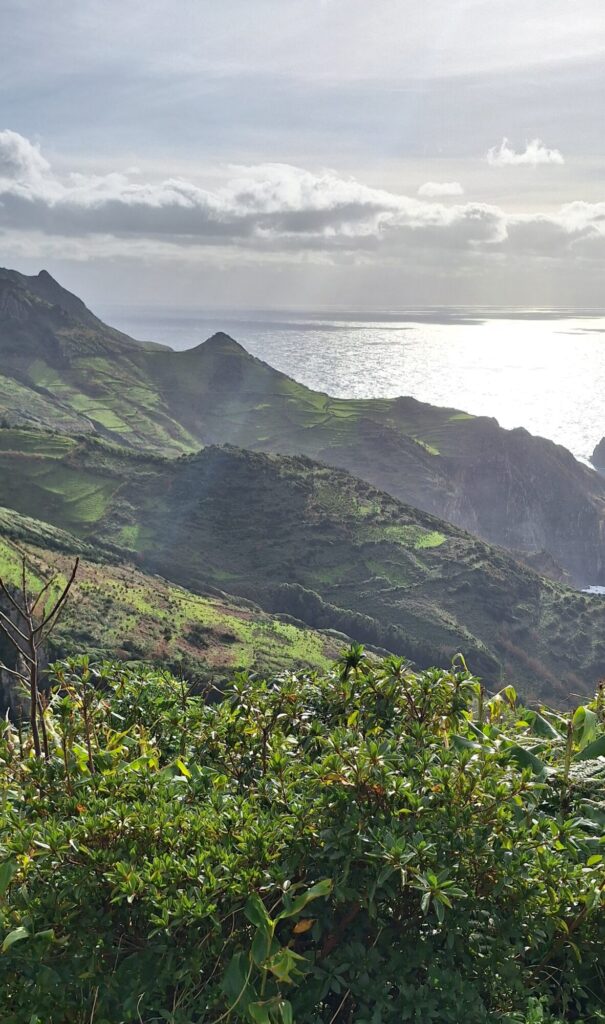
The hike follows the fields and meadows along the coastline high above the water. Views are insane, as you are high above the ocean and have views are just insane. You will pass through two villages along the way. but technically three. There are Mosteiro and Fajazinha, two rather unspectacular small towns and then there is Caldeira do Mosteiro, an abandoned village , that has been left without people for over 60 years now, when the last residents left to seek a better future in the Americas. It is a marvelous place. The old stone faccades and wrinkly trees make it seem as if time has stood still in this place since the 1960’s.
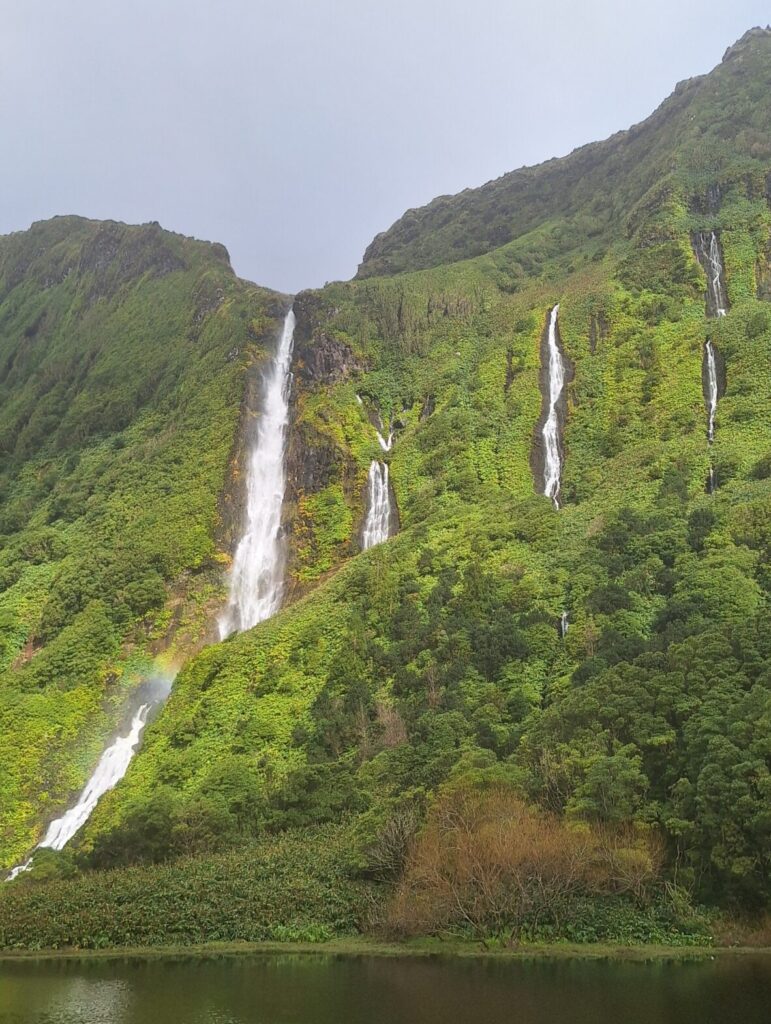
This hike, compared to the others is far easier, as the terrain is not as steep and the path is well established, making it the perfect hike, if you have children. After you reach Fajazinha do not follow the trail towards Faja Grande directly, but rather turn right and make your way up the slope towards the highlights of the island. Have you ever seen Jurassic Park? The Cascata da Ribeira do Ferreiro and Cascata da Ribeira Grande make it seem like the next T-Rex is just around the corner.
Here, the Riba do Ferreiro splits up into multiple streams before plunging over the cliffs creating dozens of small waterfalls dropping down the rocky wall, picturesquely collecting in a small overgrowing green lake. It is one of those places, where you wonder how something like this can even be created.
Turn back onto the trail towards Faja Grande, enjoy some beautiful views of the village in the distance and check off the Cascata do Poco do Bacalhau, where you can stand right next to the towering stream of water plunging down, while overlooking the village and the Ocean in the distance. End your hike by the sea, where the brutal Atlantic waves batter against black lava rock formations creating unreal scenes, before heading back to your car in Lajedo.
Day 3
Make your way up the mountainous plateau into the center of the island. If you are travelling in the off-season or shoulder season use any day, on which the plateau is not covered in clouds. During the week we visited, it was covered for all but one day and if we did not use it we would have missed our chance to do see the lakes.
Today’s hike focusses around the lagoas that filled up the ancient volcanic caldeiras. Flores is getting so much rain, that it acts like a big collecting bowl on the top. Hundreds of streams begin in the open marshes flowing over the edge and into the Atlantic on all sides. There are not a lot of trees in this area, so views are wide and there are few places to cover in case of rain or strong winds. The lakes are beautiful with lush green slopes containing them on all sides.
You are actually not able to reach the lakes themselves, as the craters are quite steep so forget swimming. Furthermore, the lakes and the area around them are protected so be mindful and do not step off the trail. After around 5 kilometers you will reach the end point of today’s relatively short hike. It is a viewpoint overlooking the village of Faja Grande from the top, with insane views over the ocean and the intricate network of fields and forests in the surroundings of the village below. You can also do the entire trail up from Faja Grande if you like a challenge. Doing it this way is harder though as you will have to scale the steep mountain side.
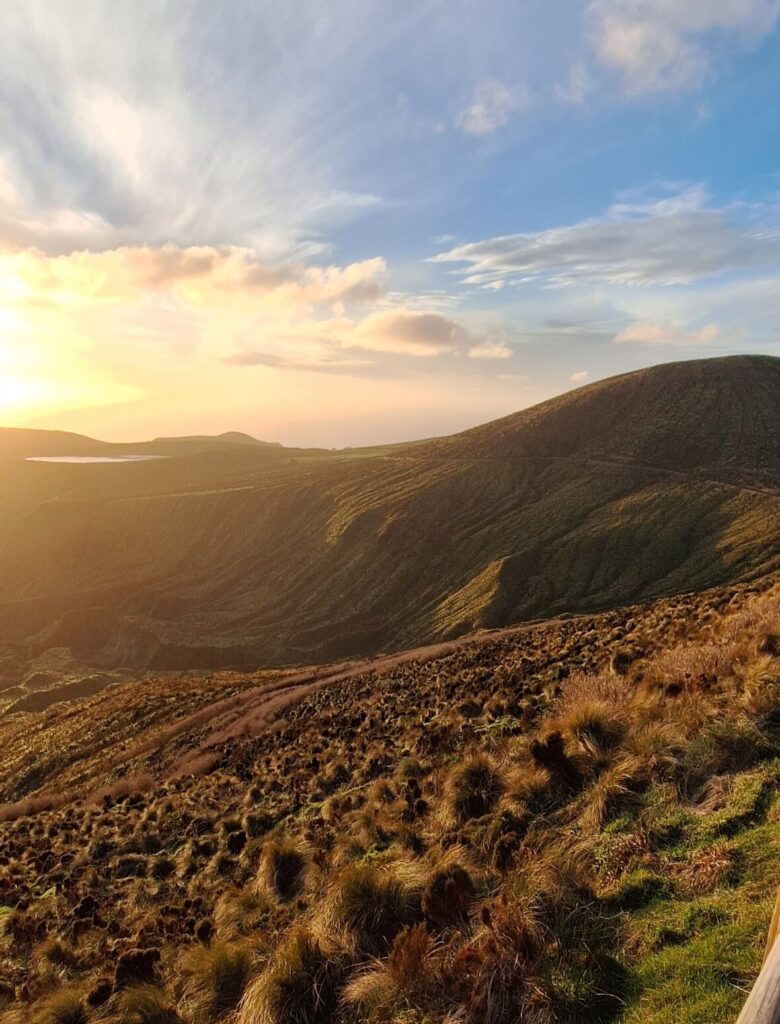
After the viewpoint hike back the way you came from and head over to Santa Cruz in the afternoon. Make a stop at Big Love by Monica’s, the best café on the island in my opinion. To be frank, there were not a lot of places to choose from when we visited as most restaurants are closed in January, but I can highly recommend them.
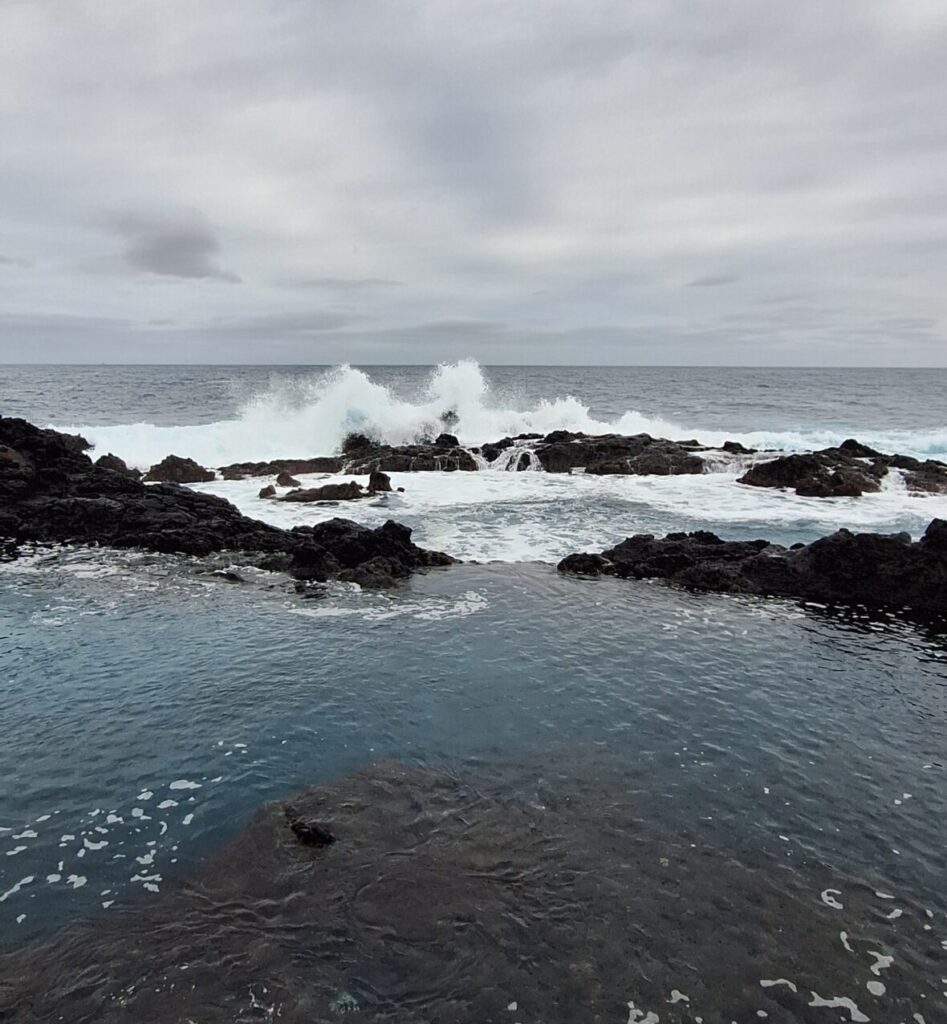
Before heading back visit the Piscinas naturais de Santa Cruz for a quick swim in the ocean. It is a human made „pool“ of ocean water, where you can swim between lava rocks. A must do while you are on Flores.
Day 4
As the hike on day 3 was a bit shorter, today will be a bit more challenging, as you hike from Ponta Delgada to Cedros via the PR01. Most online guides will tell you that the hikes goes all the way to Santa Cruz, but in my opinion it is not worth to continue beyond the Miradouro dos Caimbros, as you will have to follow the road right into Santa Cruz with cars passing by at high speeds, which is not as pleasant as the other parts of the hike. Start in either Cedros or Ponta Delgada and hike one-way along the trail. The way back is a bit tricky, busses or hitchhiking are your options here.
This trail is truly a jungle path, as you will hike through ancient forest almost the entire way. Small viewpoints overlooking the dramatic coastline are interrupting the dense greenery. While only 14,4 kilometers long, the continous steep climbs and drops aswell as the rugged trail itself make it a real challenge. Today’s dinner must be earned.
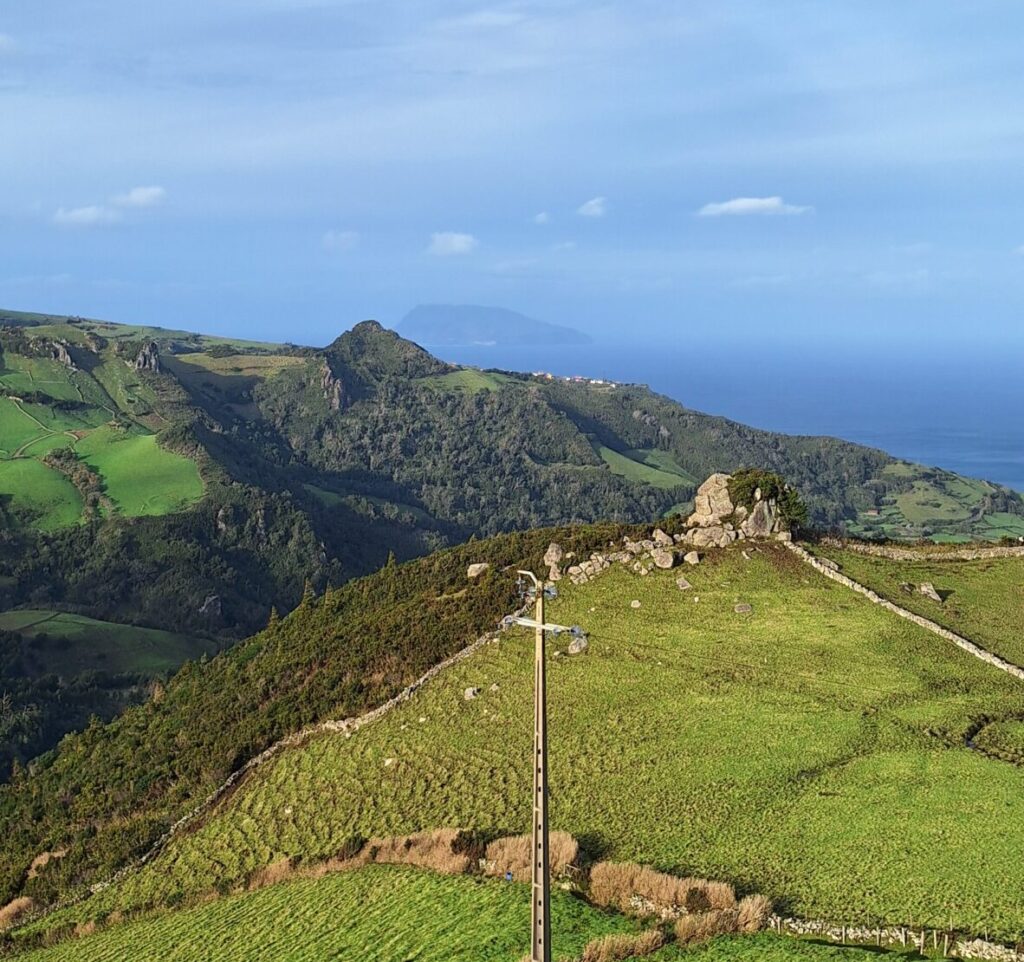
This trail allows for steady views towards Corvo in the distance and is mostly done by avid hikers. During the winter, when we hiked it, we were told that it was unpassable for a couple of weeks shortly before we arrived, due to mud slides and fallen trees covering everything. Conditions were still not perfect when we hiked it, so expect to climb tree trunks and walk through small lagunes formed by land slides from time to time.
Day 5
On this day you can decide, whether you want to do another dramatic coastal hike, the PR01 from Faja Grande to Ponta Delgada or go on an excursion to Corvo. Sadly while we visited the boat to Corvo was not in operation, but during the summer time I would definitely recommend this. As of what I researched it could have been a major highlight. The problem is, that flight schedules do not allow for a day trip and you thus have to spend at least one night there. Accomodation on Corvo is scarce, so expect to pay a bit more, when choosing this option.
Your alternative would be to do the PRO1 from Faja Grande to Ponta Delgada. It is an equally hard trail like the day before, but packed with amazing viewpoints along the way. The difference here is, that you start down by the sea in Faja Grande and hike up to the top of the plateau, with no forests covering the views of the the ocean and Faja Grande down below at any point. You could start right at the end of the road but in my opinion, leave the car near the harbour in Faja Grande and walk the small street to the actual trailhead behind the last houses.
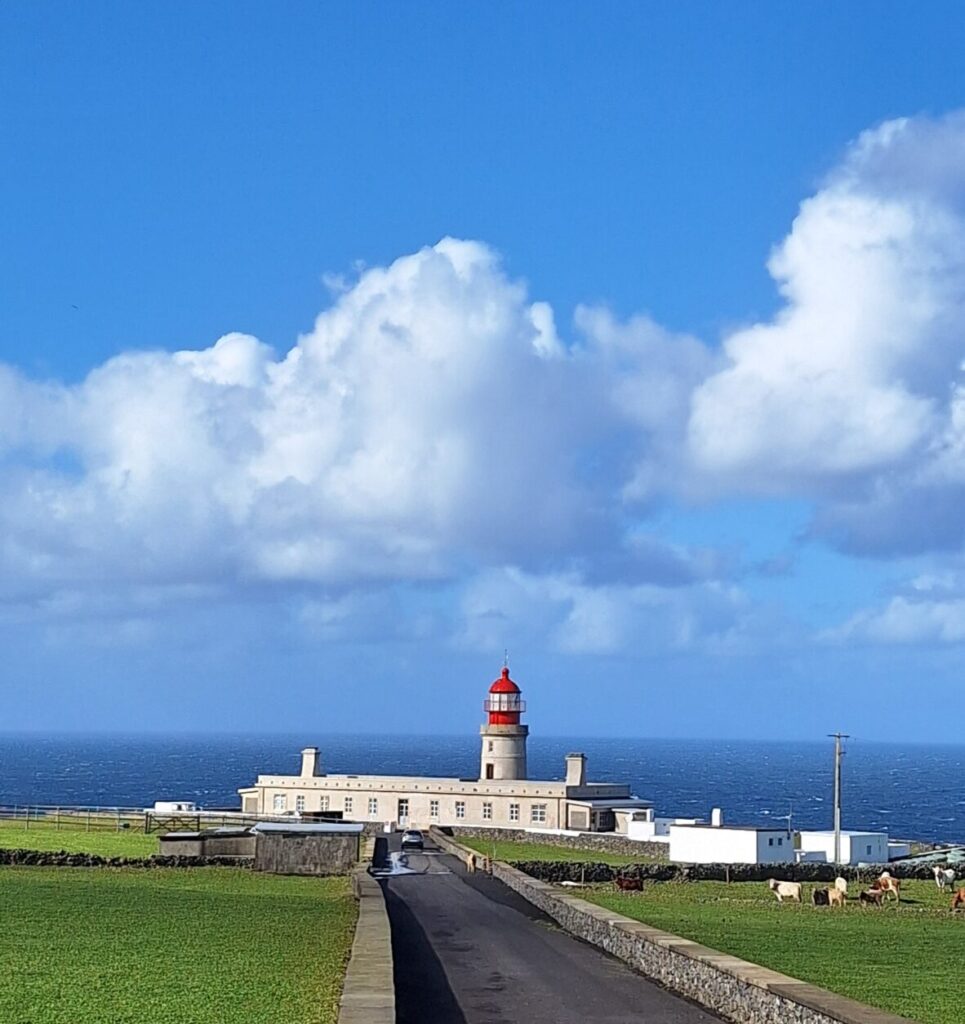
The scenery and views of the Igreja de Nossa Senhora do Carmo from there are out of this world and something not to be missed. After the end of the road the trail rises sharply up the steep cliffs. This is the hardest part of today’s hike, as after that you will be slowly walking down along the edge of the plateau until you reach the Farol de Albarnaz. The lighthouse is an iconic photo opportunity. Between this lighthouse and New Foundland, Canada, there is nothing other than open ocean for almost 2000 kilometers. Again, the way back to your car is a bit tricky. You could hike the trail back to the start, but this would require an early morning start. At best order a taxi or take a combination of busses via Santa Cruz. Hitchhiking would also work.
Budget
As we were on a tight backpackers budget, Flores did not come cheap for us. Keep in mind, that we travelled as couple in the absolute off season and that summer is way more expensive. Our costs were as follows:
Accomodation
Rental Car (incuding gas)
Daily costs
Flights Horta <-> Flores
Total
124,95€
99,82€
95,20€
93,00€
412,97€
All costs are per person. You can save some money by not renting a car and using busses plus hitchhiking. Accomodation does not get much cheaper than what we paid, as there are no real budget accomodations anywhere.
Other posts
Complete Guide: Bishkek to Osh by public transport
Planning a trip from Bishkek to Osh? Discover the best ways to travel, including flights, buses and shared taxis, with prices and travel…
Bikepacking Germany’s Baltic Coast: The Ultimate Route
Explore Germany’s Baltic Coast by bike, from sandy beaches to charming seaside towns, quiet roads and stunning coastal landscapes.
Dresden to Bohemia: A Remarkable Bikepacking Adventure
A bikepacking journey from Dresden to Bohemia through the Ore Mountains. Discover remote landscapes, Czech villages, mountain climbs, and an amazing legal wild…