What is Siwa Oasis known for?
Siwa Oasis is quite different from the main tourist hotspots in Egypt, like Giza or Luxor. It is a small island of life in the middle of the Sahara Desert, comprised of palm tree forests, lakes, small towns and villages as well as a myriad of hot springs and ancient sites.
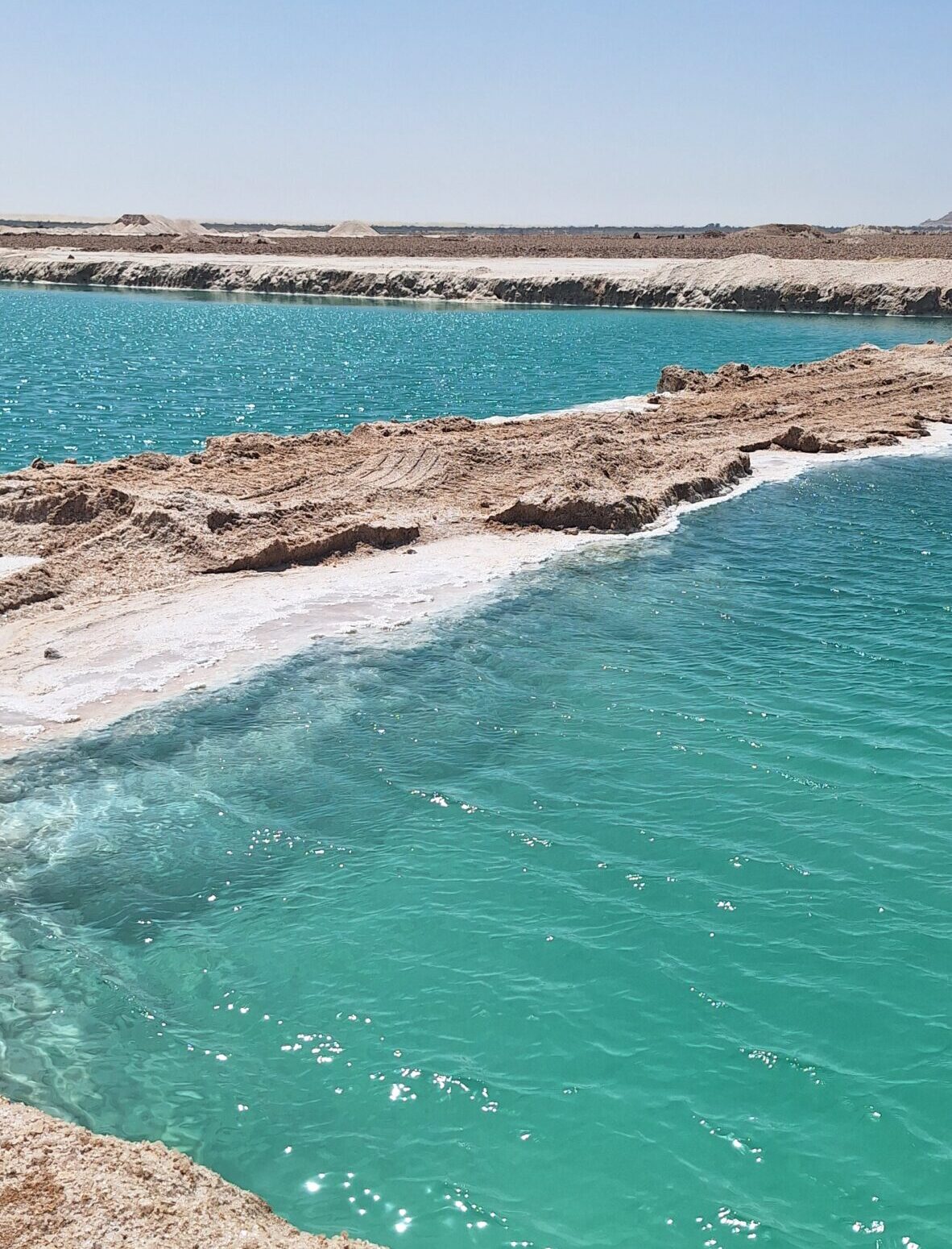
It is best known across the internet for it’s spectacular salt pools. These are water filled pools within an active salt mine, which are so high in salt concentration, that you do not only float on the surface, but the salt also crystallizes around the edges and the bottom of each pool creating absolutely gorgeous patterns. Truly, the highlight of Siwa.
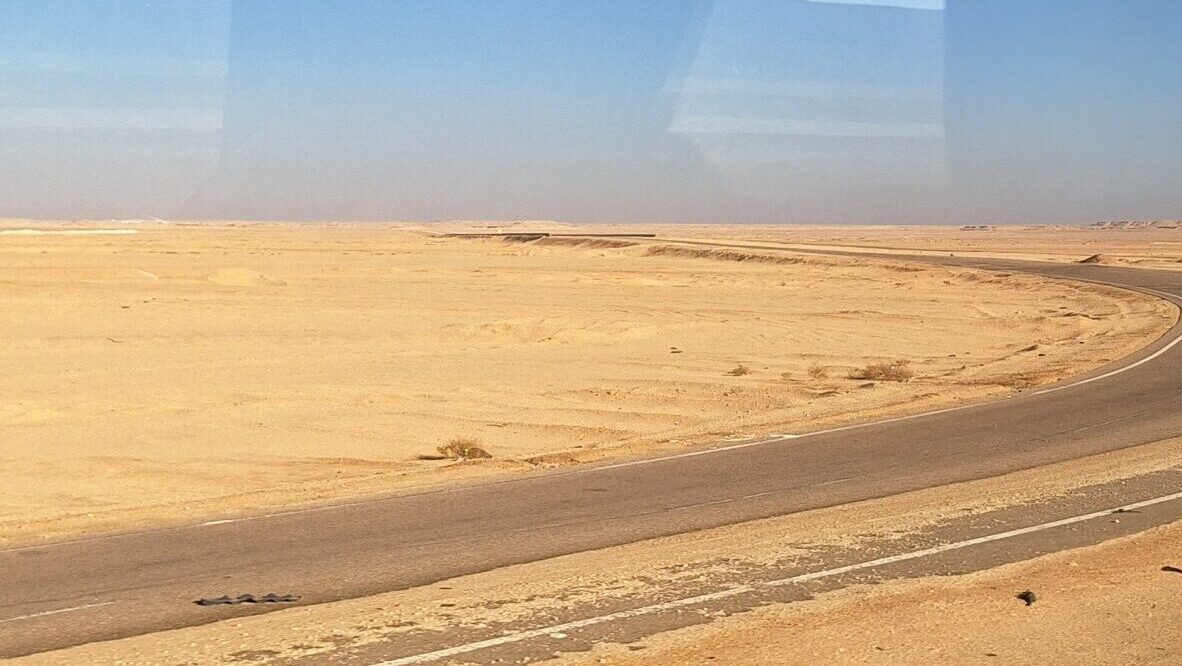
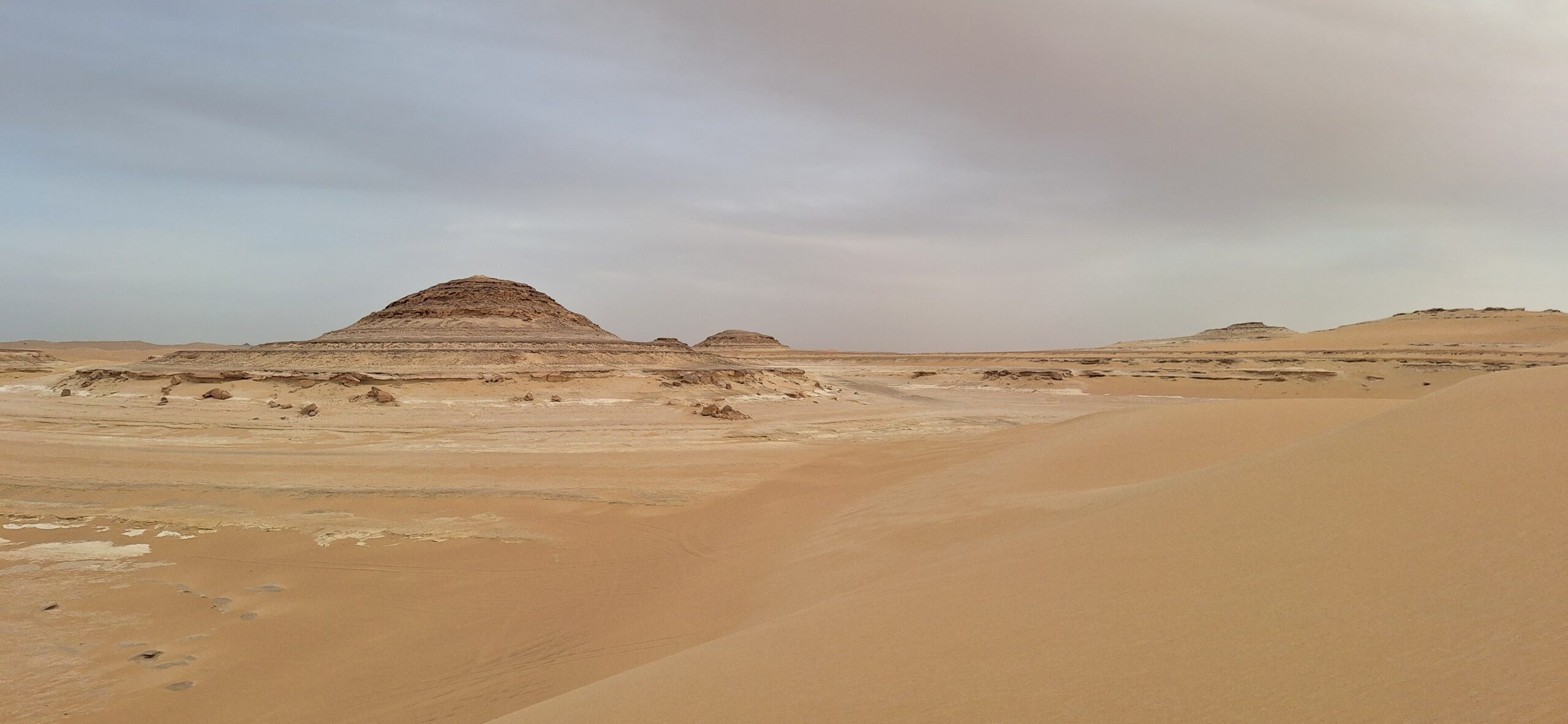
Geographically, Siwa sit’s in a depression roughly 20 meters below sea level and you can find many hot springs to relax in, as thermal activity is high in the area. Additionally, the oasis is a perfect spot to experience the „Great Sand Sea„, a sand desert that stretches all the way from Siwa to southern Sudan, before there is any sign of civilization again. It is special, as you can find many natural springs and fossils scattered throughout it, which you can experience on a Desert Safari.
What is the best time to travel to Siwa?
The best time to travel is from October to April. Temperatures are more pleasant during that time, hovering between 17°C and 30°C. As Siwa is mainly an outdoor destination, you do not want to come here during the summer months. Heat and sun are brutal during that time and you will not be able to enjoy the oasis, as your body will fight the intense conditions.
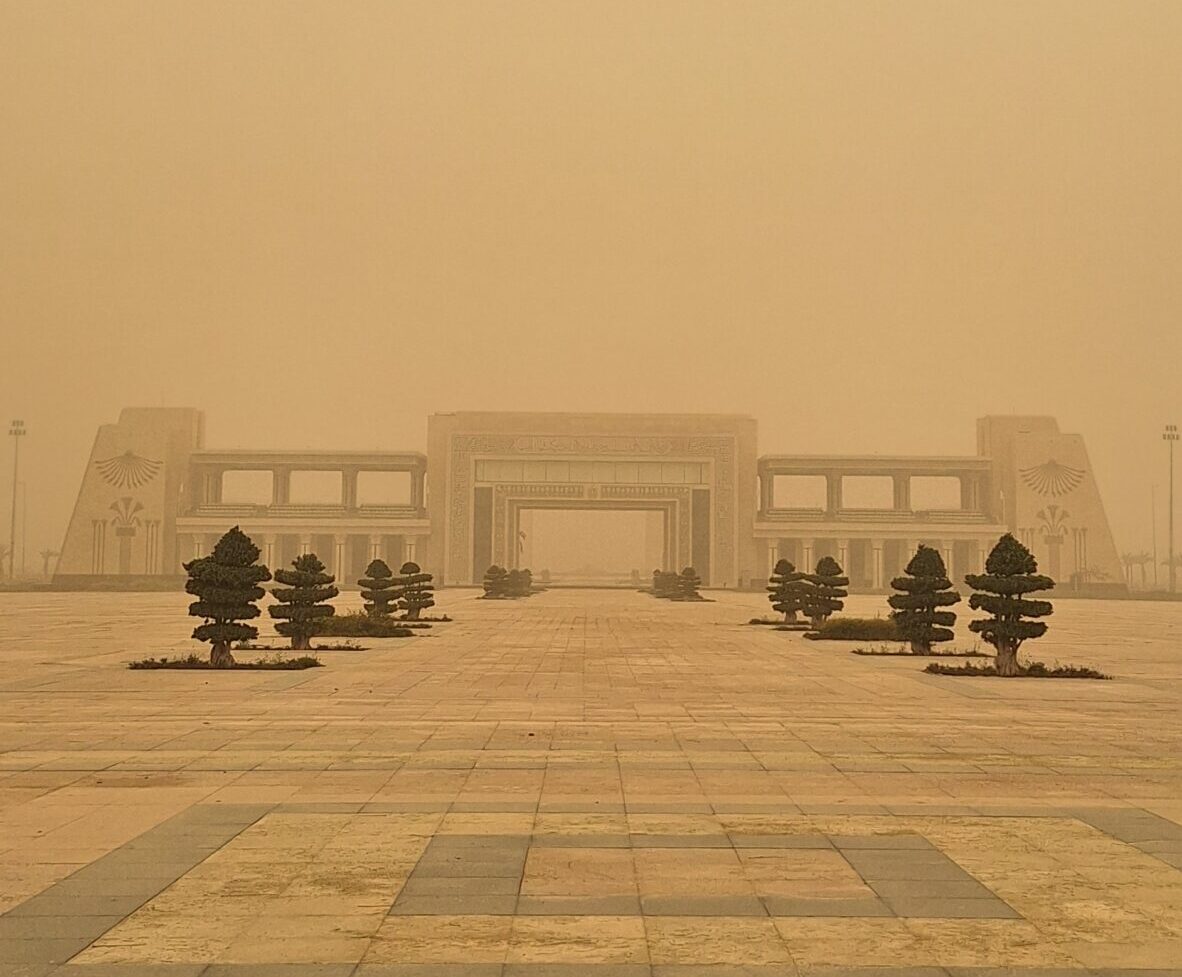
Most tourists visit, as it gets warmer again, so either in October or April, which it perfect to combine with other northern egyptian destinations like Alexandria or Cairo. That way, you’ve got comfortable and sunny summer weather during the day, perfect for exploration, and cool air during the mornings and evenings, perfect for jumping into a hot spring and relaxing your muscles from a day of adventures. Of course, being in the Sahara Desert always brings the risk of ending up in a sandstorm. See my guide about the New Administrative Capital of Egypt to see what this would look like.
How can you get to Siwa Oasis?
To reach Siwa you have multiple options. You can take the bus, the minivan, a shared taxi or book a private transfer. In my transport guide for Siwa I explain in detail, which option is best for you.
Which accomodation is best for you?
This totally depends on your style of travel. You can stay in the town center, where busses arrive, where shops are and where you can easily organize tours from or you can stay outside of town somewhere in the Oasis. Advantages here are the quiet nights, less polution and more greenery, but transportation here is more of a problem.
If you are just here for the sights and do not have too much time or do not want to worry about how you can reach certain places, I definitely recommend staying in the main city. Siwa Town has some amazing budget stays and you will not be dependent on the TukTuk drivers for getting around.
If you come from Cairo or Alexandria and have spent the last days in the hasstle of the city and want to have something more relaxing, maybe choosing an accomodation somewhere in the oasis is better for you. If you worry about how you can organize transport and tours from there, the accomodations got you. They offer everything from tours to the salt lakes to simple transfers into town for a cheap price from a european perspective, although it is quite expensive compared to local taxis.
As we needed some rest after having travelled through Egypt for more than 2 weeks already, we chose the second option and stayed at Gazrashek Siwa Eco Lodges. I cannot recommend this accomodation more, as it was definitely the best value-for-money we ever managed to get anywhere on our travels. They offer small bungalows with a huge breakfast and have a hot spring on-site that is included in the price of the stay. We paid around 11€ for 2 people per night. We organized several tours with them, as the upcharge compared to tour operators in town was not too big. Some tour operators quoted us even more than our acomodation.
Being outside the main town means that you have to take a TukTuk at some point or walk really long distances. We solved this problem by walking to town both days, as you can visit different sights like the Amun temple on the way, plus you get a really authentic look into daily life of the Siwa people and then taking a TukTuk back in the evening.
The perfect 2D,3N itinerary for Siwa Oasis
Day 0
If you choose to travel to Siwa during the day, you will probably arrive late in the afternoon or early in the evening. To get a good first impression of Siwa before throwing yourself into it the next day, head to Shali Fortress and watch the sunset from there as it is only a 10 minute walk from where the bus ends. We did not know about it the day we arrived but went there the following day and it was stunning.
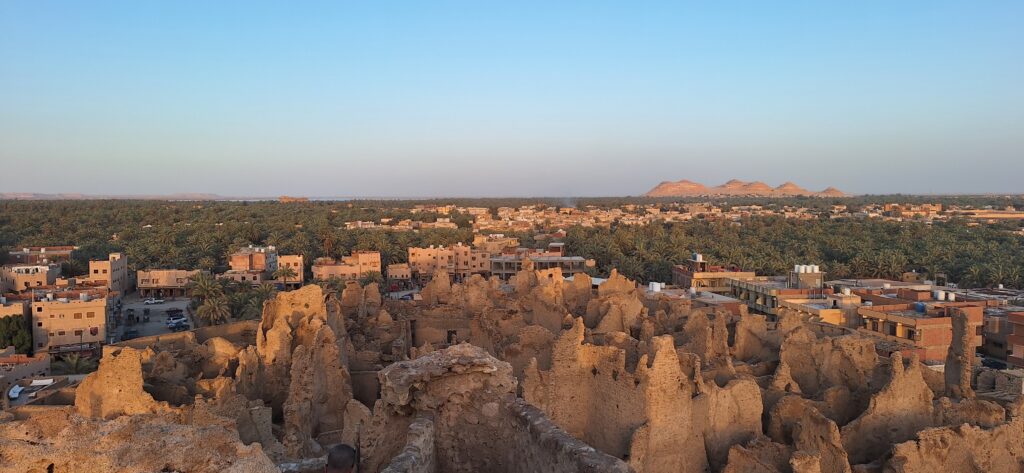
Situated right in the town center, Shali Fortress is a centuries-old structure, that early Siwi inhabitants built as a fortified city in the 13th century. The fort was abandoned after an event of heavy rain in 1926, which heavily damaged the structure. The walls and roofs were never rebuilt and people settled around the old fortress in the town we now call Siwa.
Walk through it and look at the walls. They are made of „Kershef“, which is a local building technique, where clay, salt and rocks are combined to create extremely sturdy walls, once dried. Watch the sunset from the top of the fort and head for some dinner in town afterwards. If you want to save some money, take a look at the map above, where I highlighted some cheap eats, which serve authentic meals.
Day 1
On you first full day in Siwa, start with the Salt Lakes right away. You have to take some kind of tour to get there, as they are quite far from basically everything. As of April 2026, we paid 300 EGP per person for a tour with our accomodation. It could be even cheaper, when you go with one of the TukTuk drivers. The one we asked quoted us 300 EGP for the entire trip, no matter how many people, so as a group, you can save even more.
Visiting the salt pools will take anywhere from 2 to 4 hours, depending on where you go exactly and how long you want to swim. If you want to see those natural holes in the ground, which are all over Instagram, tell your driver before the trip. If you don’t say anything they will just take you to the main pools. These are man-made as they are part of an active salt mine and although those are much better for swimming then the smaller ones, if you want the perfect picture for posting online, the driver has to go to a different location.
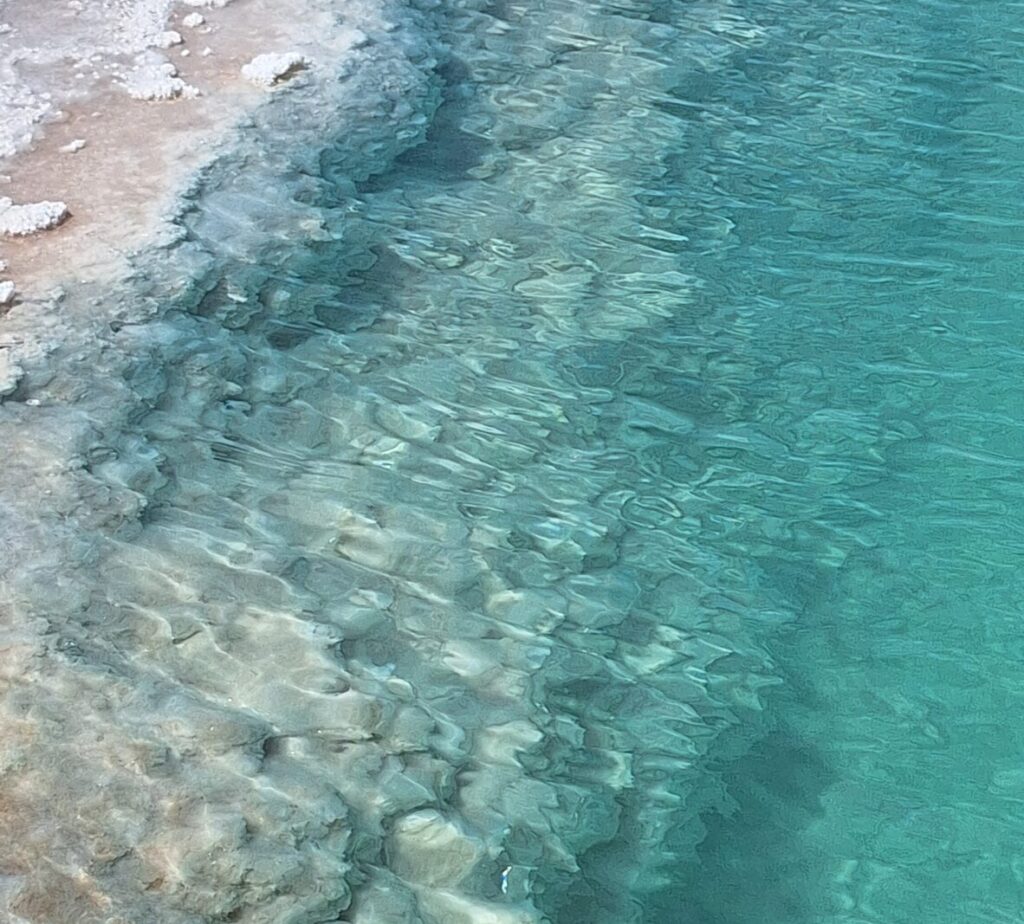
We only went to the big pools with our tour, as we realized our mistake only once we arrived. Because we went together with other people, we just stayed there and enjoyed the pools and had lunch. The pro of having an actual tour instead of just a TukTuk driver is that they can bring a huge canister of water with them in the car to wash off the salt before it crystallizes on your skin. Salt concentration in the pools is extremely high and it sticks to your skin immediatly once you leave the water.
Don’t forget some bath shoes to walk over the salt crystals. Outside the pool EVERYTHING is made out of salt and the result is a razor sharp and completely solid layer of salty crust. I cut myself and would bring some shoes the next time haha. Also remember not to shave anything before going there, as fresh wounds can burn in the salty water.
After the salt pools, head back to your accomodation to freshen up and then go to the Amun Temple. If you are staying in town you can get there by TukTuk. The way to the Amun temple leads through many dusty neighbourhoods and is not that pleasent to walk through, but if you want it is roughly 35 minutes on foot.
The Amum Temple is famous for having been visited by Alexander the Great, who received here the divine order to rule, legitimizing his position as leader of his empire. Today, the temple is surrounded by smaller ruins of former housing structures and offers some amazing views over the date palm forest surrounding it. It costs 120 EGP to enter, 60 EGP if you are a student. Make sure to look through the slits of the boards closing off some parts of the structure. Behind it live desert fox, which we could see from just a couple meters away. Completetly unexpected.
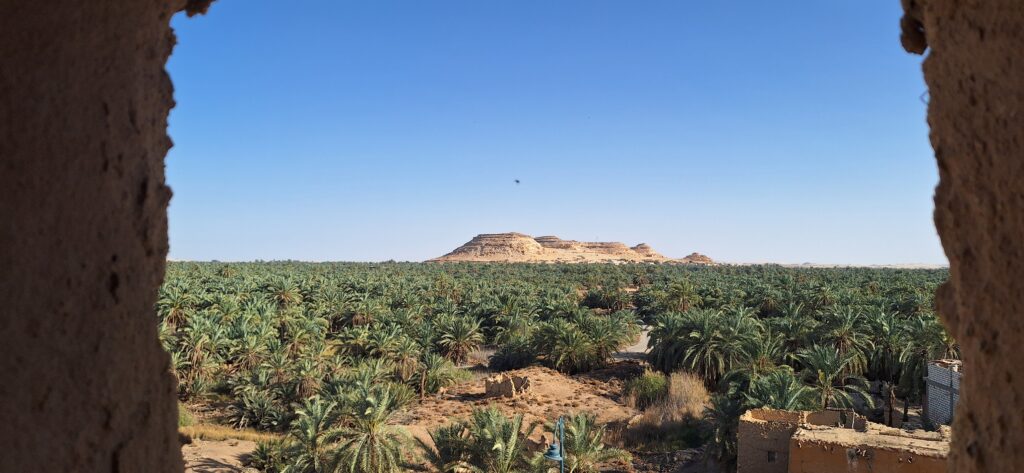
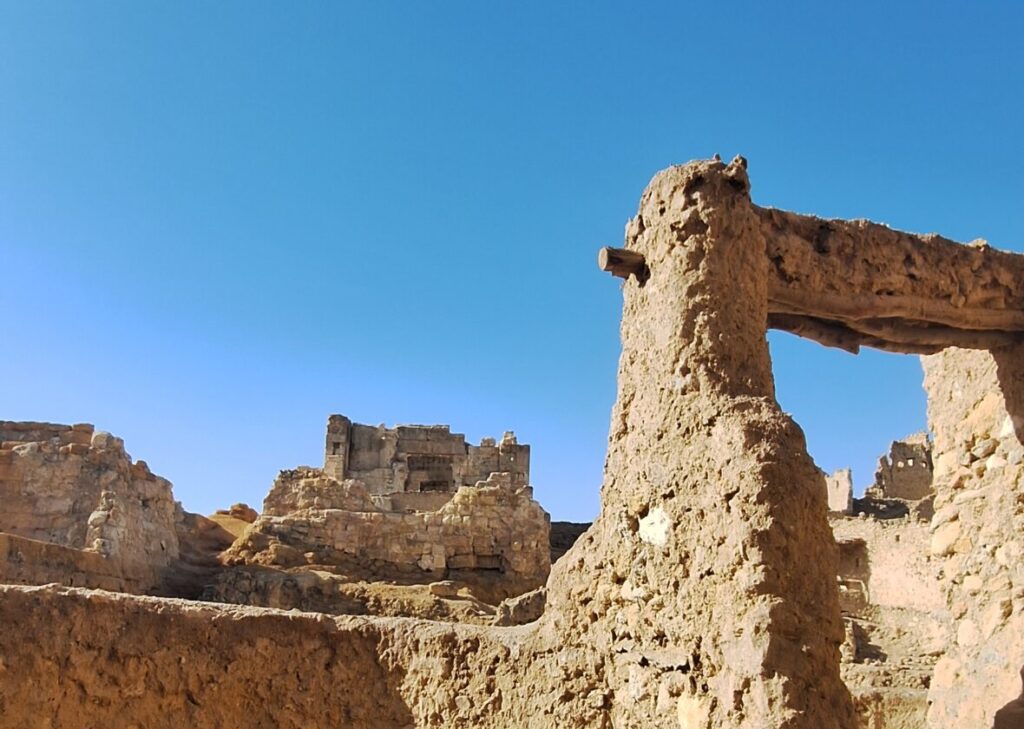
After Amun Temple, many tours will take you by car towards Cleopatra’s Spring, but if you really want to experience the vibe of the oasis, walk along the route described in the map above. There are not too many cars passing by and you can visit every site on the way. We were the only ones on foot here but it was so worth it, as I cannot think of something more relaxing than walking along an empty street surrounded by palm trees and water flowing through small streams nearby. We even bought some ice cream from a local vendor somewhere in the forest, who was just passing by aswell.
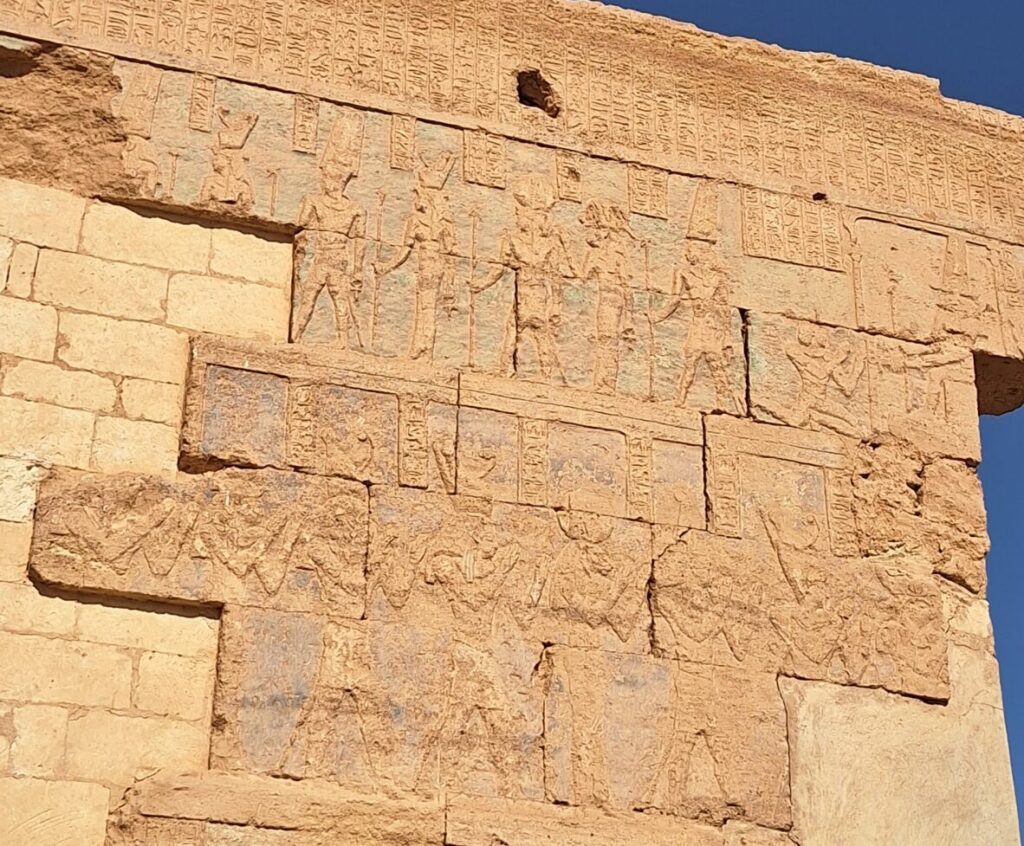
The next small stop is just 5 minutes walking distance. The Umm Ubayd Temple is shrouded in mystery, as it’s true purpose has been lost to time. The main theory is that it is/was connected somehow to Amun Temple. Here you can see some egyptian hieroglyphs from the 30th dynasty, which compared to the Hieroglyphs in the Amun Temple, are much better preserved. Most of the temple though has been destroyed, as parts of it were (no joke) once used to build the local police station. The temples hieroglyphs are of course not comparable to what you can see in other party of Egypt, but yet they are quiet reminder of pharaonic history in the country.
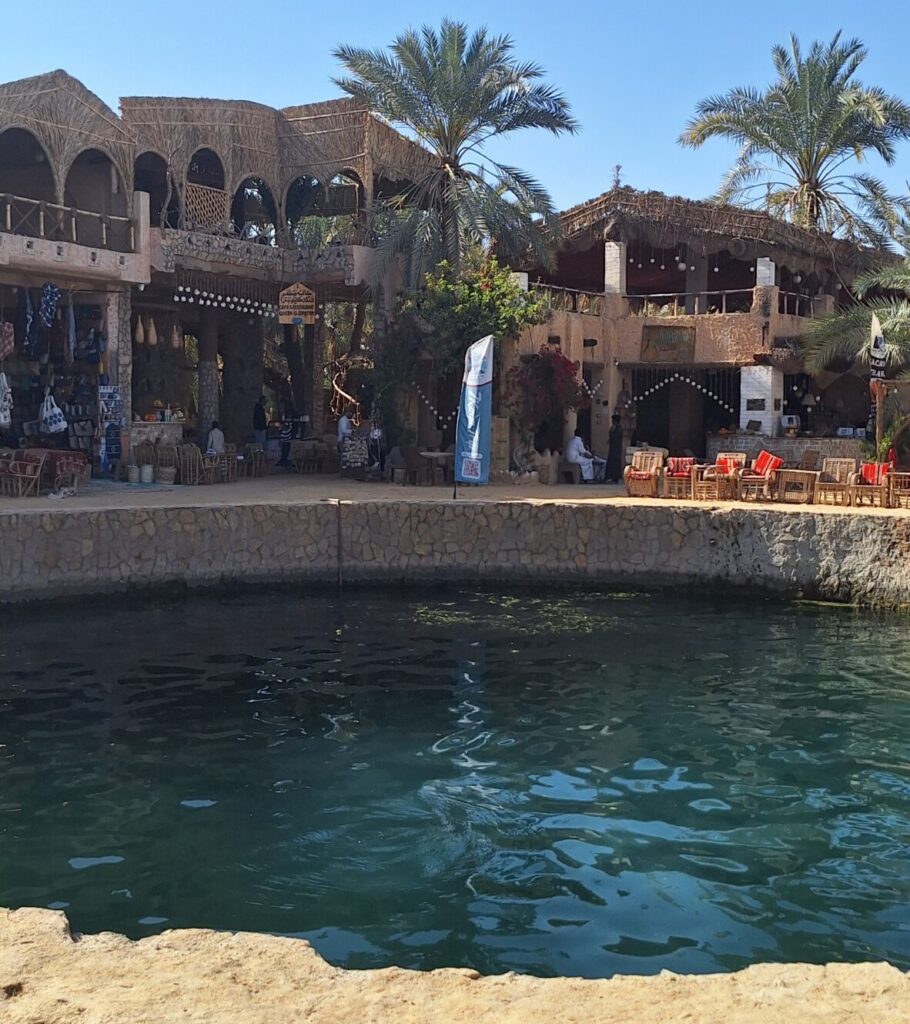
After Umm Ubayd the next stop is Cleopatra’s Spring. This is one of many fresh water springs in Siwa. Probably one of the biggest aswell. According to the legend, it was the favorite place of Cleopatra herself to take a swim on her visits to Siwa. When we passed by, the water was very clear and some local kids swam in it, but we did not. There are some cafés around, perfect to have a coffee or a „Siwa Juice“, which is a combination of milk, dates and banana in one drink.
Honestly though, there are probably better pools elsewhere to swim in, as we saw a lot of locals hanging around and enjoying a tea, but not going for a swim themselves. Everyone would have just watched us go swimming and we were a bit to shy haha. Maybe though we visited during an unusual time and all the other tourists already left again.
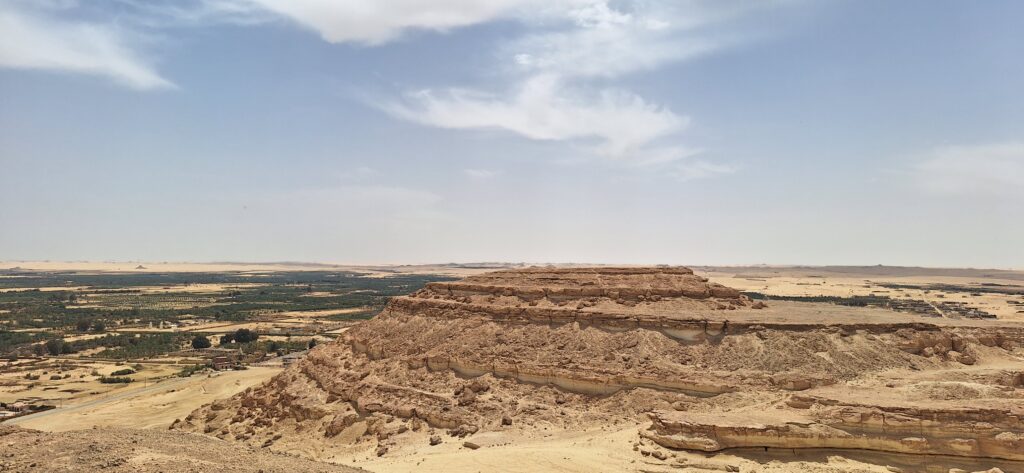
Start this part of the day at Amun Temple before 4pm, as they close after that, but do not be too early for the last highlight of the day. After Clepatras Spring, the last stop is the Gabal Dakrour mountain. In my opinion, it is the best vantage point in all of Siwa. The climb is a bit adventurous, as there is no clear path, but if you are physically fit and not too afraid of heights, it is roughly a 10 minute climb to the top.
Gabal Dakrour is a typical table mountain, which you can find everywhere around Siwa. You start the climb at an abandoned village next to the road. Most tours also make a brief stop here but only visit the houses before continuing, which is a shame. The views at the top are insane. You can see the sand dunes, the salt mine, the lakes, the endless date palm forests covering the Oasis and get a perfect impression of the landscape surrounding you.
On the top you will also be surprised to find imprints of shells and starfish everywhere in the rocks. As Siwa was not too long ago the bottom of an ancient sea, the marine history is visible everywhere if you look closely. If you are here for sunset, then watch it from here. Should you be here earlier, I can highly recommend heading to „Breezy Restaurant“ instead. They are not the cheapest, but the location is unbeatable, with tables right next to the shoreline perfect for dinner with sunset views.
Day 2
On your second day in Siwa, organize yourself a tour to the „Great Sand Sea“ the day before, as they need to register with the police in order to take you there. We went with our accomodation, which quoted us 2500 EGP per person. This is quite expensive but we did not want to stress about finding a cheaper tour the day before. Like this, we could fully enjoy the first day and I would only advise you to do this, if you have enough time left on day 1.
In the end most people spend so much time traveling to Siwa, and then don’t want to spend extra time researching on the ground. Another couple we met managed to find an operator, who did it for 1800 EGP per person with someone else, so there is some room for haggling, if you really want it.
Typically the tours leave around 3pm, so you have plenty of time before that. If your accomodation does not come with its own hot spring, this is the perfect time to try it out. In the early morning head to one of the many pools. It is best to ask your accomodation, as they know the best ones. It is advisable not to go too late, as temperatures rise aswell and it is only cool in the early morning and late at night.
Right after sunrise though is truly relaxing. We only used the spring in our accomodation, but we saw many during our walks in the oasis and were recommended a couple more. There seems to be plenty of choice.
After the spring, head to Gabal al-Mawta. This moutains is situated around 20 minutes walking from the town centre. You can also get a TukTuk to bring you here if you want to avoind the dusty streets. The mountain is a burial sight for the local Siwi population used for thousands of years. Here you can find egyptian style tombs, some of which have been excavated and can now be explored. Not as grand as the valley of the kings of course but with still mesmerizing and interesting to explore. During WW2 the local population used the tombs to hide from Italian air attacks.
The mountains costs 120 EGP entrance fee or 60 EGP for students and is open until 5pm daily. Again, you will be able to get some amazing views from the top. Definitely a must-see spot in Siwa. After Gabal-al-Mawta, head back to town and have lunch before the desert tour. The promised drinks and snack on our tour only consisted of tea and peanuts so we were glad we had eaten something beforehand.
All desert tours have basically the same structure. Your driver will pick you up in town or at your hotel and then drive you and other tour guests southwards into the sand dunes. You will ride over towering sand dunes with the drivers having some insane driving skills, giving a real offroad thrill. Sand here is really bright, so if you have sunglasses, bring them. This is really different compared to for example the Erg Chebbi, which we visited on our morocco road trip, which had more off a deep orange hue to it.
This shows how different the Sahara is, depending in the location. If you are getting motion sickness easily, then forget the tip about eating I gave a second ago.
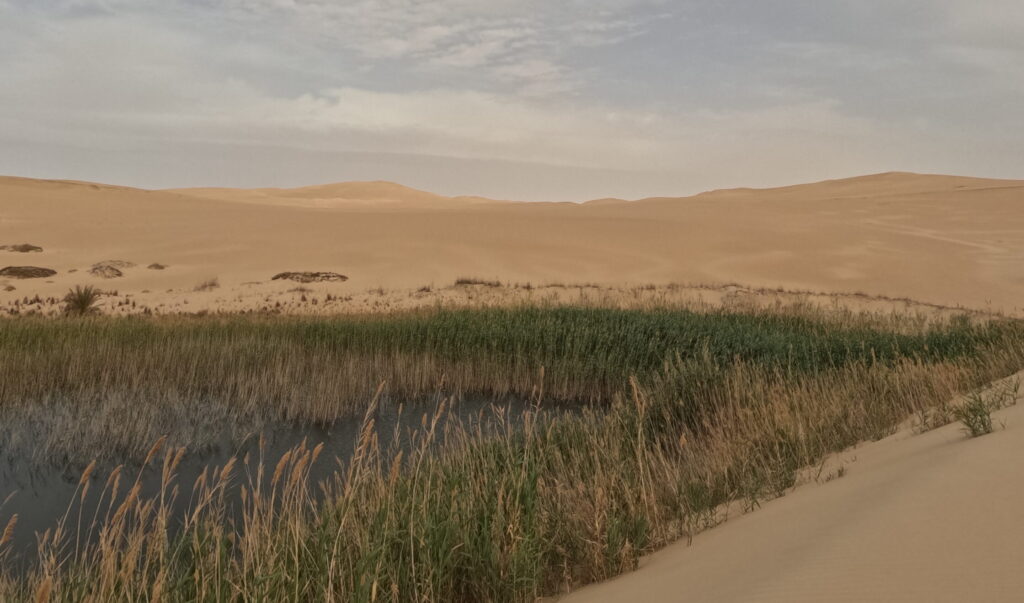
Our first stop was at a small lake that was hidden a couple of kilometers into the desert. This is the point, that in Google Maps, is marked as „Cold Spring“ for reference. It looks like how you’d normally expect a Fata Morgana to look like. It is basically a small valley between the dunes, where out of nowhere reeds begin to grow in the sand, followed by the lake. The phenomenon is entirely natural, having to do with the complex network of thermal springs below the sand. Basically, this point of desert is low enough, so that a water carrying layer of earth is exposed creating a lake where none should be.
After the lake we continued towards one of the typical table mountain formations, where the driver wanted to show us „fossils„, as he called it. What he meant with that was the huge amount of fossilized mussels and even starfish just laying everywhere on the desert floor. At certain points the rock below the sand lies open exposing these marvelous formations. A truly surreal experience und completely unexpected as we are in the Sahara Desert more than 300 kilometers from the next sea.
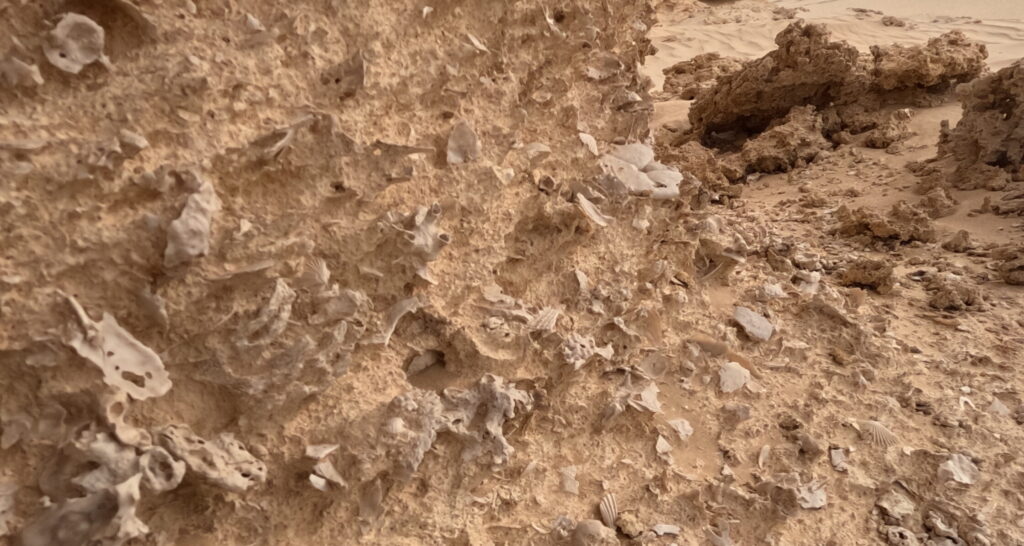
The furthest we went into the desert was the Bir Wahed Oasis, which is famous for it’s sulphuric hot spring. It is also much larger than the Cold Spring lake Oasis we visited before. Sadly it is not that well managed. A small shop sells coffee and tea and a couple of tables and chairs are there to sit. Everyone was led into the café area, which was sealed of by low walls behind which trash was hidden. Not that idyllic.
The hot spring itself was sadly not usable as it was extremely dirty and full of algea, although there were changing rooms available indicating that one can in fact swim there. We hope that in the future the management may change but this made Bir Wahed a bit of a letdown for us. The upside was, that we had 30 minutes there and could undertake a small hike around the perimeter of the oasis taking some amazing pictures along the way. Everyone else stayed at the café for some reason and just waited until their tours resumed.
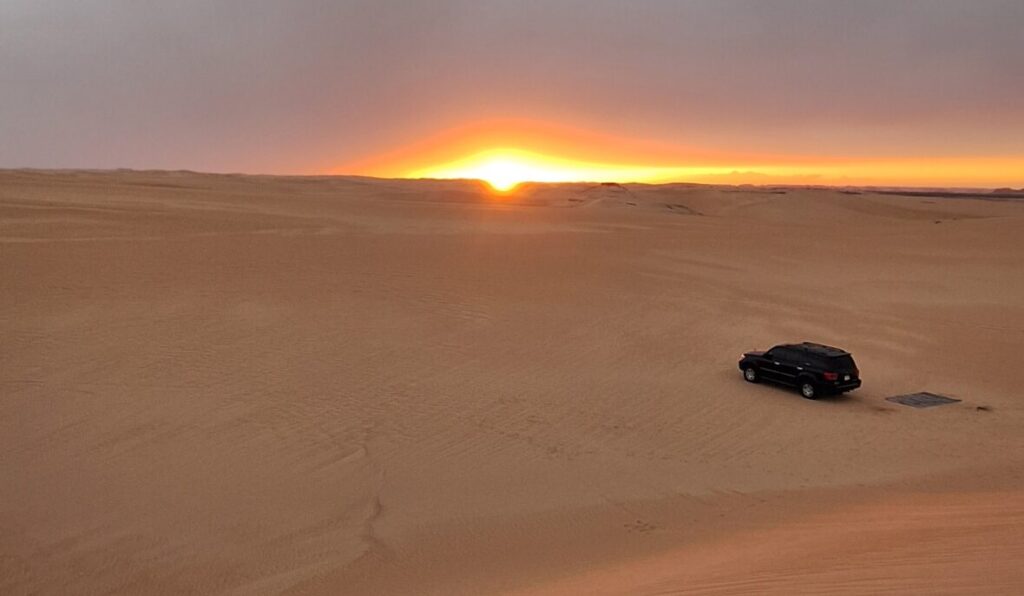
On our return from Bir Wahed and after getting stuck in the sand for a couple of minutes, the driver reached a nice vantage point from which one could see far into the dunes as well as look over the Siwa lakes in the distance. Here we made a picnic and tried sandboarding, while watching the sunset, which was absolutely amazing. All in all the tour to the desert did cost 40€ per person but took over 4 hours and there was plenty to see, so I can definitely recommend you to spend a bit of extra money on this, as it is not your typical desert tour.
Our budget for 2 full days in Siwa
| 3 Nights Accomodation | 15,04€ |
| Food | 9,84€ |
| 3 TukTuk Rides | 2,46€ |
| Salt Lake Tour | 4,84€ |
| Desert Safari | 40,32€ |
| Total | 72,50€ |
This is extremely cheap, compared to most other places in Egypt. The main money saver is definitely accomodation. Although ours was far from town we did walk into town both days as there are quite a couple of things to see and a tour is not really necessary. We only had to take the TukTuk back. Given that we travelled as a couple, thus sharing room and rides, prices of that would be double if you did it the same way as we did but alone.
Our accomodation offered a huge breakfast, which allowed us to eat so much, that we were only really hungry in the evening again haha. Excluded from these costs are the tickets for the bus to get to Siwa, where we spent an extra 14€.