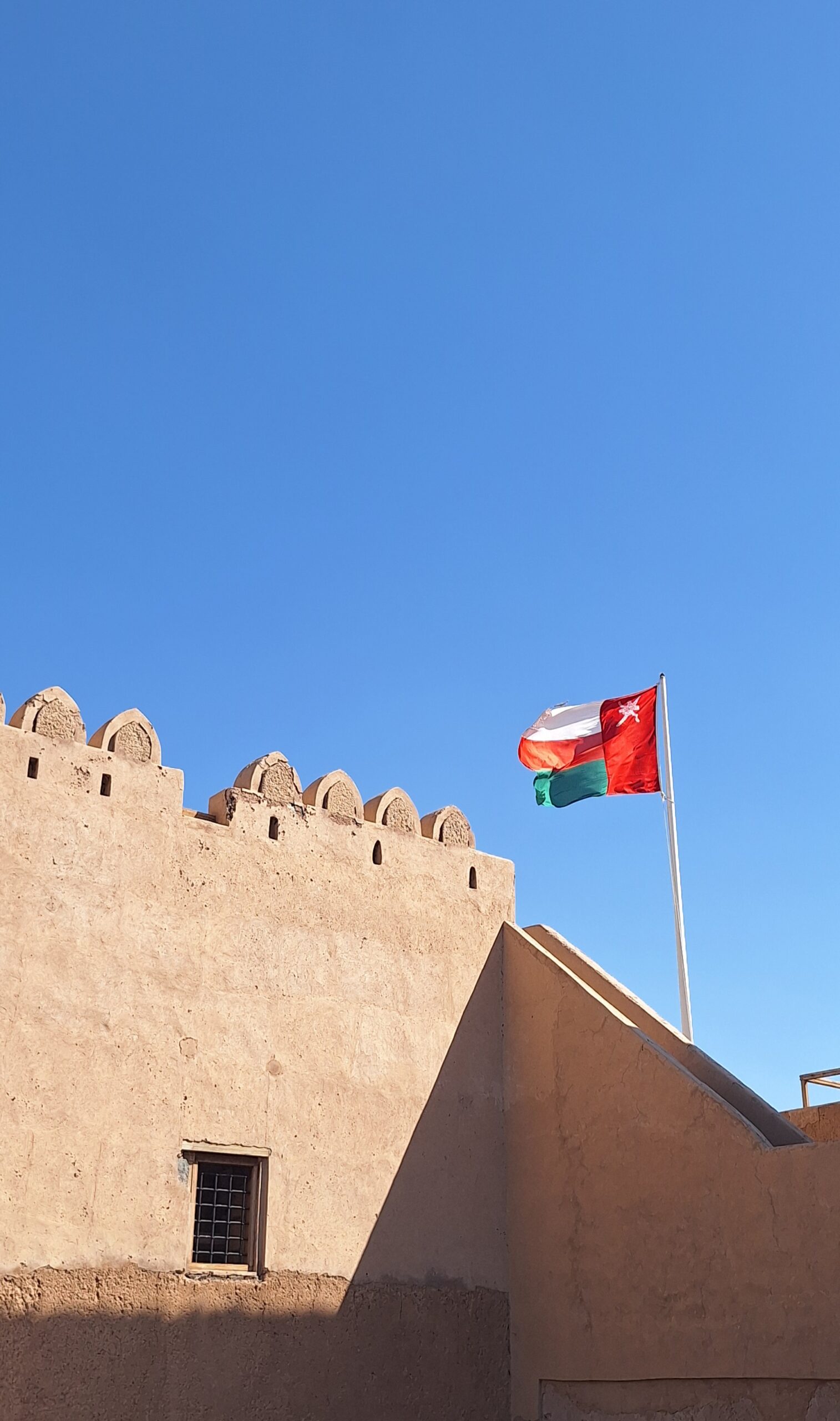
Oman is one of those countries, that no one thinks about as a destination for a roadtrip, though indeed the country is up and coming as a growing hub for tourism in the region. This 7 day itinerary will hopefully give you an idea on how you can best travel Oman.
Day 1: Arrival into Muscat
You probably land at Muscat International Airport, by far the biggest in the country, or arrive by bus from Dubai or Abu Dhabi. It is important to know, that Muscat is VERY centered on cars and all of the infrastructure is build for them. Therefore, if you want a smooth experience, I’d recommend renting the car upon arrival at the airport. There is a limited bus network in the city, but it is chaotic and barely working. On one occasion, we tried to take the bus from Muttrah back to Ruwi bus Station and waited an hour as for no reason at all, not a single bus came. It is important to know that on shorter distances, prices for taxis can be similar to busses, so whenever you find yourself in a difficult situation, do yourself a favor and spend that 200 Baisa more on a taxi.
Day 2: Muscat
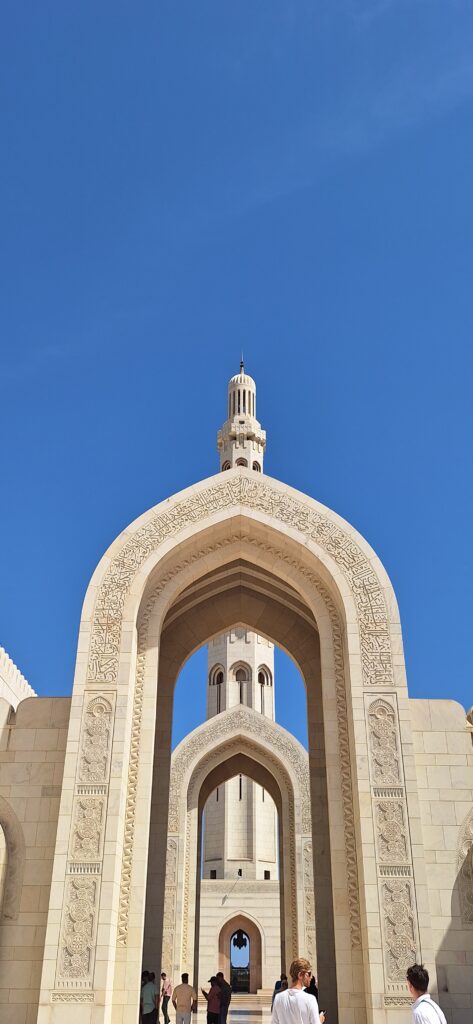
When you wake up on day two of your itinerary, I would recommend visiting the main sights of Muscat. Start your day by visiting the Sultan Quaboos Grand Mosque. It is the biggest Mosque in Oman and is home to the largest chandelier in the world. But make sure to arrive early as it closes for tourists by 11am. Wear adequate clothing if you want to get in, meaning clothes covering shoulders and knees, aswell as a headcover for women. After visiting the Grand Mosque, Headset on towards the Royal Opera House. Visit it from the outside or book a tour to guide you through. Sadly, we visited during Eid, so no tours were offered. Head on to the beachfront behind the Opera house. It is part of Qurum beach, but if you follow the marker for it on Google Maps you will not arrive at the best part of it. There are also restaurants in the area, perfect for a lunch break. After that, most guides would now recommend Muttrah Souq as your next stop, but in my opinion, skip it. It is, compared to other arab countries pretty touristy and few Omanis live there. The area is mostly inhabited by workers from India etc. and both times, we visited we had far from an authentic experience. In my opinion it is best to head on the the Royal palace and combined with it, visit one of the forts around it. Finish your day off by visiting the National Museum. It costs 5 OMR for tourists, but presents a lot of information about the history of the country. Perfect for the start of the trip. Tip: Do not visit the Royal palace during lunch and afternoon hours, as you will be outside and it can get very hot. After around 4:30 it is more barrable.
Day 3: Driving to Sur; Bimmah Sinkhole and Wadi Shab
The next morning the roadtrip really begins. Head on south towards Sur, the road is a big Highway for it’s entire lenght, making the entire 200km drive doable in 2 hours. But don’t head to Sur directly. After a bit more than 1 hour of driving, turn of the Highway to „Hawiyat Najm Park“, known in English as the Bimmah sinkhole. It is a sinkhole filled with salt water. In my opinion the sinkhole itself is not that impressive, but it was definetly worth the stop, as the water is filled with cleaner fish, that, if you lay still in the water, start biting off dead skin cells, which gives you a tickeling sensation. After relaxing in the water for a while, continue on the Highway and take the exit towards Wadi Shab. The entrance to the Wadi is right below the Highway, so park your car, grab some water and sunscreen and Start the 45-minute hike towards the Wadi. In the beginning you have to pay 1 OMR to the ferry boat to drive you across the river mouth and back, as the hiking trail begins on the other side of the canyon. The trail itself is not difficult and everyone can do it. Remember to take with you enough water.
Tag 4: Sur; Drive to Biddiya
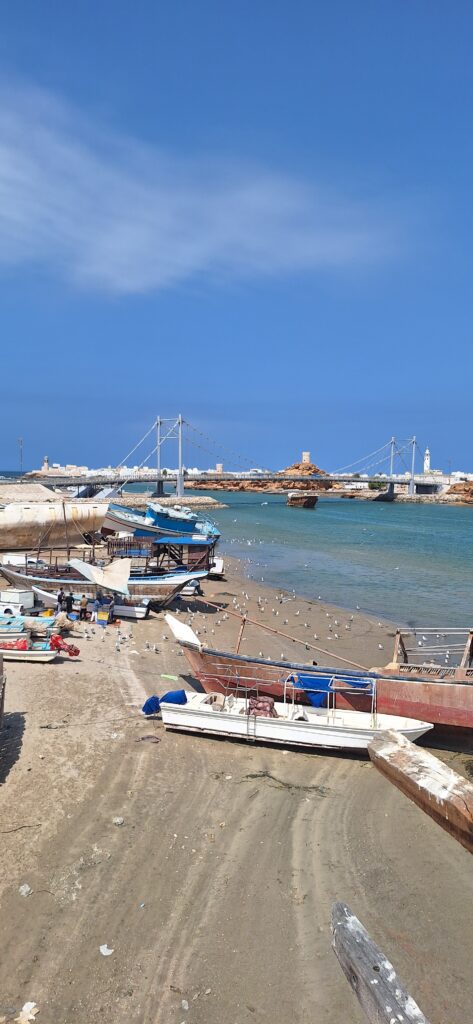
Begin your day in Sur. The city itself is not that beautiful, but I would absolutely recommend visiting the Dhow Factory, a small museum that explains the history of Dhow building and sea exploration in Oman. It costs 2 OMR. Also take a look across the harbour, where there are to this day a lot of dhow boats used. After that, head to the Al-Ayjah Lighthouse to take a look across the white houses of the city and visit one of the cute cafés in town. Head on towards Biddiya, a town along the outskirts of the desert, where you can sleep in a tent in a desert camp. Although we are never a fan of such artificial, touristy experiences we really liked this one, as you can watch the sunset in the dunes, take pictures on the swing in the desert and book different desert activities.
Watch out: The owners tend to make their money not with the accomodation, but with the much more expensive tours. We did not book such a tour in the camp we visited and only paid 13 OMR for 3 people for the night. A better deal in the area is rare. Make sure not to arrive too late that day, so you can relax and enjoy the sunset in time.
Day 5: Wadi Hiwar and Drive to Al-Hamra
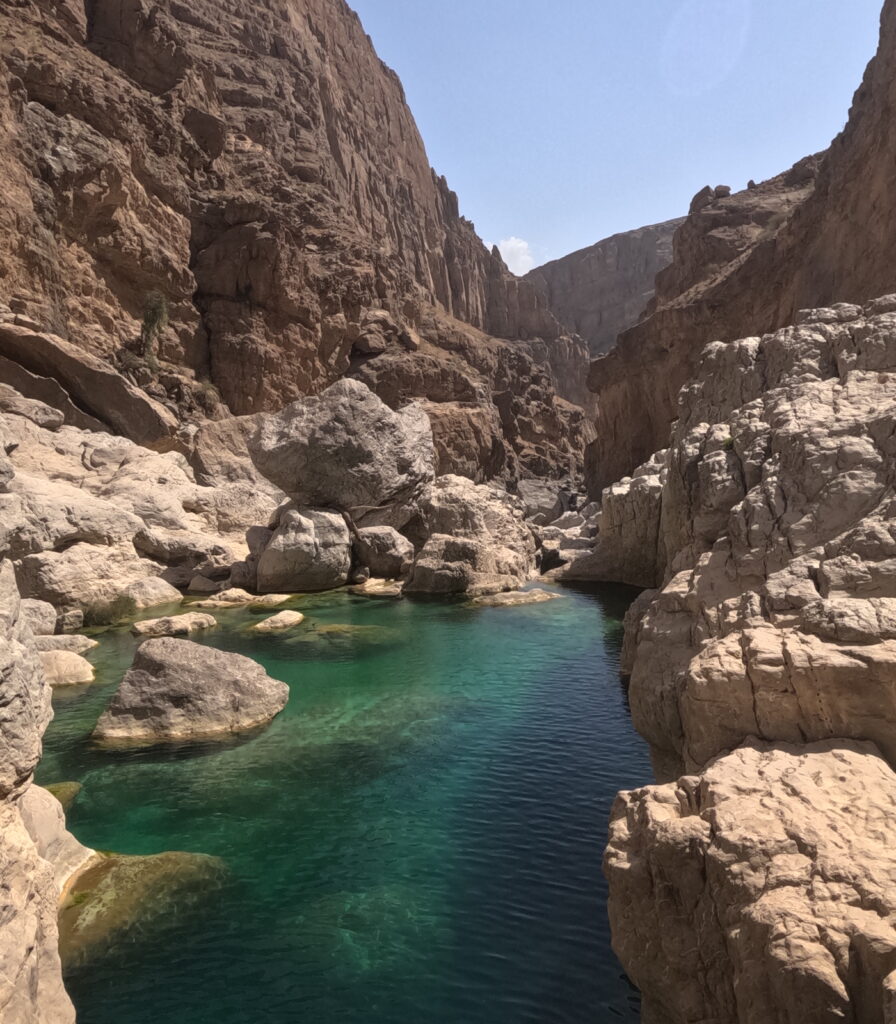
Start early that day, as you take your car in the opposite direction of your destination in the beginning, as to visit Wadi Hiwar. It is close to the much more famous Wadi Bani Khalid, but we enjoyed this one a lot more and it was our favorite place in Oman. It is quiet and not a lot of people come here. There is also very little signage to indicate the way there. Park your car just below the mountain village, where there is a small dirt road branching off towards the right of the road. Walk along the road and after around 1km you will arrive at the entrance to the Wadi. Walk in, the goal is to reach the big waterfall. Don’t give up when you can’t find the way, a local guide is not really necessary. At one point, you have to climb a small rock slab, at another there are iron bars hewn into the stone to make it easy to climb the boulder. After that, just follow the river. At one point shortly before the waterfall, there is no coming through on foot. You know you have found that spot, when there is a big boulder giving shade to the river, a good place to relax. Next, swim through the cracks of the boulders to an area only reachable through the water. There you find the waterfall and the incredible views over the canyon. In total we spent 4 hours there. Head back to your car and drive back towards Biddiya. Pass the city that time and head West towards Al-Hamra. This is the longest drive on your roadtrip at 2,5 hours. You will pass through the more famous Nizwa. I would not recommend getting accomodation there, as it is dry as any other Omani town. Instead opt for something within the Al-Hamra Oasis. It is filled with lush greenery and old clay houses throwing you back in time. There is the Saaf cafe in the middle of it all to top it off, one of the most gorgeously situated cafes I have ever seen. The accomodation we had was perfectly situated within the green area and perfect for relaxing after a long day of travelling.
Day 6: Forts and culture
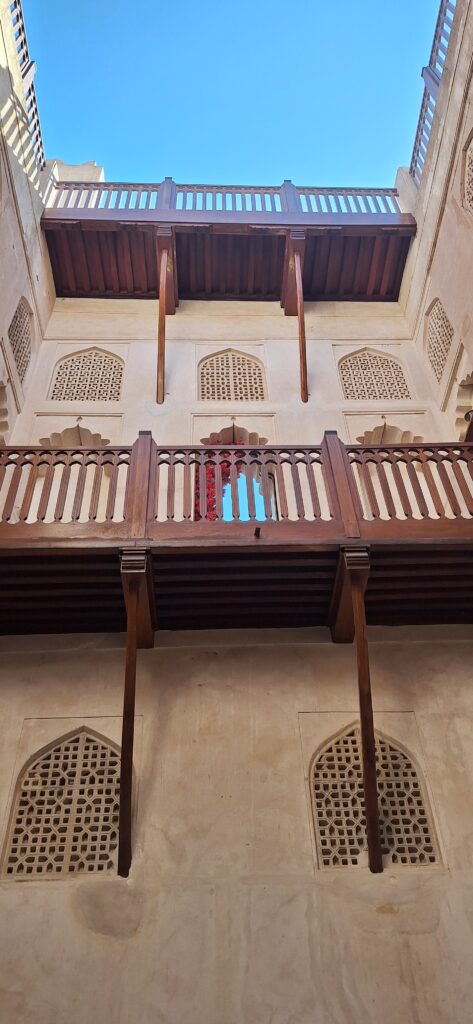
After the day in the Wadi, head on towards Bahla Fort (4 OMR) or Jabreen Castle (3 OMR). They offer the same experiences as Nizwa fort, at not such a high cost. As of writing this Blog entry, Jabreen castle has neither an Audio guide nor a digital guide, so opt for Bahla fort, but I can imagine that Jabreen castle is more worth the money, when there is more information given. Check their website. After the castle, head on towards Nizwa. If you have time visit the Oman across ages museum. It is a new construction free to enter and offers a nice overview of Omans history. In Nizwa stroll through the old town and for Instagram photos head to Nizwa fort, as it is an iconic place for photos. Enjoy your time in a café or rooftop restaurant and head back to Al-Hamra.
Day 7: Hiking Jebel Shams
The last full day in Oman is best used to hike Jebel Shams, either doing the „balcony walk“ a 4 hike along the Wadi Ghul canyon or, if you have time and hiking boots, climbing to the top. We did the later which gives the same amazing views over the canyon and the mountains of Oman, but takes much longer. We took to the peak and back around 9 hours, but it is totally worth it. Actually you cannot climb the highest peak in Oman itself, as it is used by the Military. You arrive on the ridge right next to it and then have to walk another 40 minutes along it towards the south summit, the highest hikeable peak in Oman. Whatever hike you decide to do that day, you have to drive up from Al-Hamra across the mountainous roads. At some point the Asphalt turns into a dirt road. Many people will tell you, that you have to have a 4×4 to make it, but we did it in our cheap rental car without any problems. Stay attentive to road conditions and drive slowly, then you won’t have a problem.
Day 8: Return to Muscat
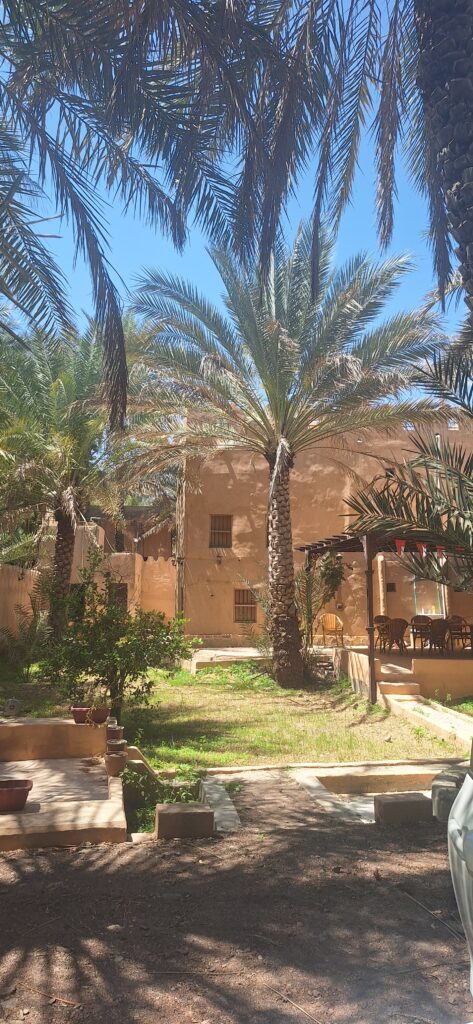
On the last day, where you return the car, I would recommend taking a walk around Al-Hamra itself in the morning hours. The light is just perfect and it is very calming after the arduous day in the mountains. Walk along the small walkways and explore everything. There is also a small museum, that for a small price shows insights into a traditional Omani house. When you are done head back to Muscat. The road after Nizwa is a big Highway, so you will be there in no time to return the car or, as we did, enjoy the evening on the beaches of Muscat to return it the next day.
- How to Hike the Pekoe Trail in 5 Days (Budget, Stages & Practical Guide)The Pekoe trail is an authentic way to see Sri Lanka. Anyone who has been to the country in the last couple of years knows that this is harder and harder to do, as mass tourism slowly takes over popular sights such as Ella, Sigiriya and Mirissa. During our time in Sri Lanka, we felt… How to Hike the Pekoe Trail in 5 Days (Budget, Stages & Practical Guide) weiterlesen
- The fascinating hidden gem of Morocco: EssaouiraVisiting Morocco, everybody has this idea of traditional medinas filled with lively markets and the smell of spices all around. The problem is, in today’s world, where westernization is in full force, more and more of these places are lost forever. Probably the biggest example of this is Marrakech. When you go there and hope… The fascinating hidden gem of Morocco: Essaouira weiterlesen
- Tutorial: How to take the bus from Dubai to MuscatIf you want to go from the United Arab Emirates to Oman and you do not own a car or have a private driver, most people will fly. But today I want to show you another way and, as far as I know, the only other method of getting from one country to the other… Tutorial: How to take the bus from Dubai to Muscat weiterlesen
- 7-day Roadtrip through the Moroccan Desert (Full Guide)Many dream of a roadtrip through the USA. Endless roads, stunning nature and a freedom, that cannot be found in daily life. But what if I tell you, that you don’t have to travel all the way to the US for that. We visited Morocco as part of our Gap Year and were awarded with… 7-day Roadtrip through the Moroccan Desert (Full Guide) weiterlesen
- Kyrgyz horse trekking: How to find a guide with horses and what to expectAs Instagram made it popular in the last couple of years, many people want to travel to Kyrgyztan and ride horses around the high mountains and endless, empty grasslands surrounding them. Still though many people we met while visiting the country were as clueless as we were on how to go about arranging such a… Kyrgyz horse trekking: How to find a guide with horses and what to expect weiterlesen
Schreibe einen Kommentar