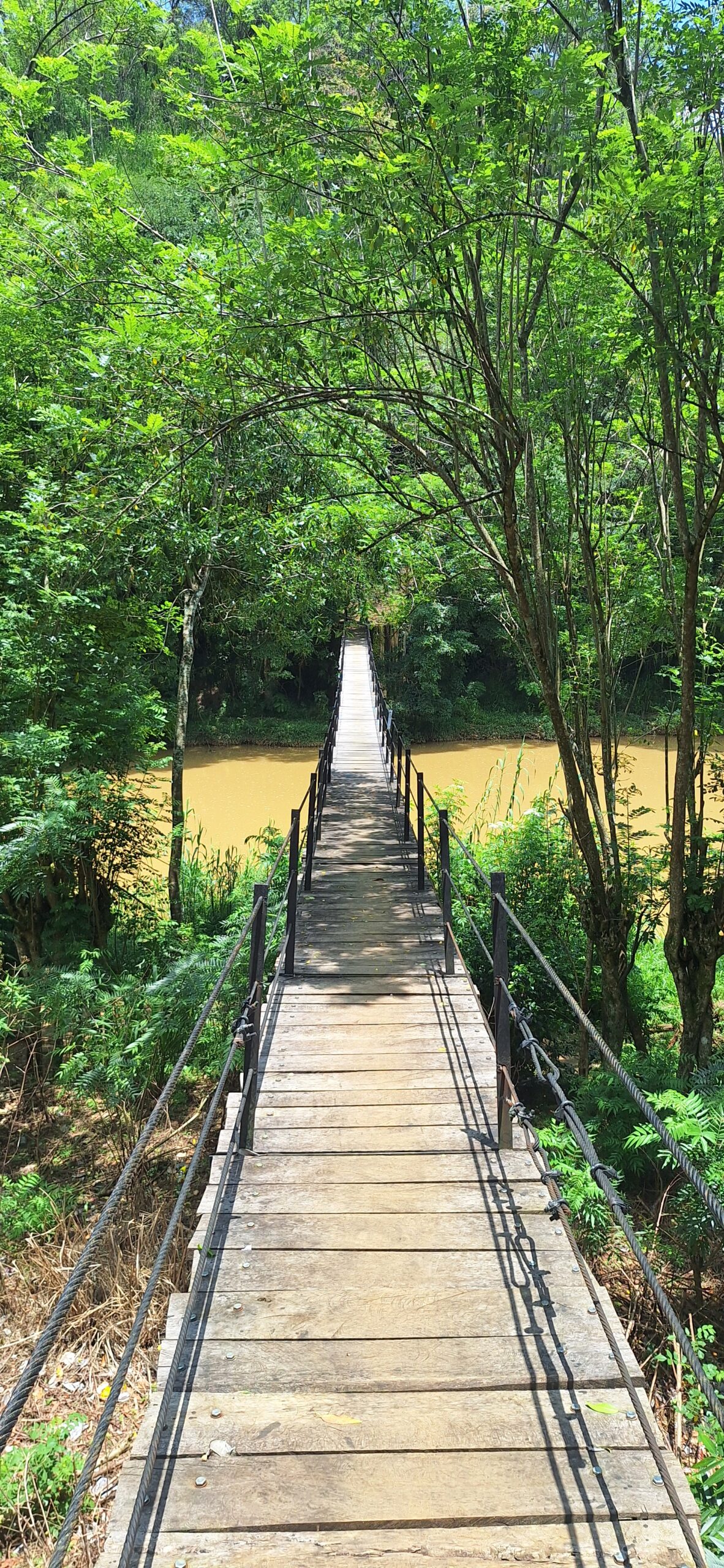
The Pekoe trail is an authentic way to see Sri Lanka. Anyone who has been to the country in the last couple of years knows that this is harder and harder to do, as mass tourism slowly takes over popular sights such as Ella, Sigiriya and Mirissa. During our time in Sri Lanka, we felt like we were missing out on the true nature and culture of the country, if we only stayed in the places mentioned by practically all other guides we found online. As we travelled through Ella, we saw a small sign on the side of the road indicating the „Pekoe Trail“, which marked the beginning to the best part of our trip.
As the Trail is pretty new and there is practically zero coverage about it online, this guide will hopefully help you plan your itinerary hiking through the tea country.
What is the Pekoe Trail?
The Pekoe Trail is a 300km long walking trail in the heart of Sri Lanka. It starts up north in Kandy and ends in Nuwara Eliya with many highlights on the way such as Ella and the Horton Plains. Do not think of it as one long curated hiking trail like in the Alps, but rather as a connection of many small local trails and small roads, that the project uses to create an uninterupted trail crossing large chunks of the central highlands. The trail is managed by the Pekoe Trail Organization (TPTO), a non profit that cares for the trail and keeps it intact. It is a part of a larger initiative that tries to diversify tourism in Sri Lanka and make it sustainable, counteracting the overtouristic development of other parts of the country.
Why hike the Pekoe Trail?
If you like staying in hostels partying with other foreigners and getting surf lessons down in Hiriketiya that is totally fine, though keep in mind, that this is far from the real Sri Lanka. If you actually want to experience how people live, how to country works and how the culture influences daily life, you have to get off the beaten path most tourists take. The Pekoe Trail is exactly that. It throws you into a part of Sri Lanka without tourists and aggressive Tuk Tuk drivers, where locals just follow their daily routines and where tourist money is not the main way people get by.
If you decide to do the Pekoe Trail, be prepared to experience a world that 99% of tourists will never see and where a smiles and a quick „hello“ in Sinhala can get you invited for tea by locals along the way. It is a different kind of experience, but definitely not one you will regret.
What equipment do you need?
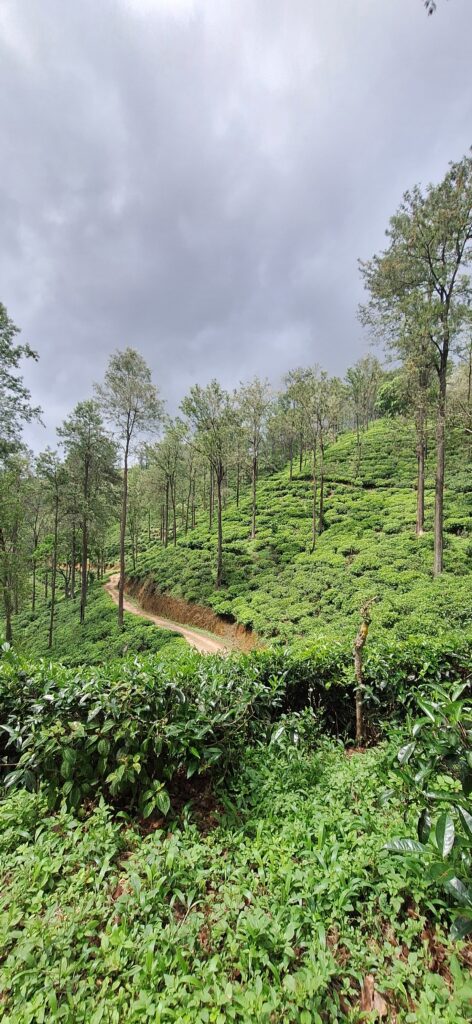
To hike this long distance trail, you do not need excessively expensive hiking equipment, as you never reach alpine territory. The stages wind through villages, green mountains covered with tea plantations and forests in the valleys down below. Your main enemy will be the tropical climate, which is something to keep in mind when packing your bag, as there are some essentials that you absolutely need.
Sturdy hiking boots or trail runners
Although many sections follow roads or footpaths locals use aswell, once it rains, everything turns muddy. As it rains basically everyday in the afternoon, good shoes are essential to keep dry if you did not reach your next accomodation by then.
Long, breathable clothing
Although it is really hot, I would not recommend you to wear short clothes. Especially at noon sunscreen is not quite enough to be safe from the sun so having a layer of breathable material above the skin helps keep your skin safe. In the event that it rains it is extra advisable to wear at least long hiking pants. That way you are even safe from the leeches.
Sunscreen (at least SPF50)
As Sri Lanka sits not far from the equator, the sun is no joke here. Do yourself a favor and bring STRONG sunscreen with SPF 50+ in order to stay safe. Our daily routine was reapplying sunscreen every couple hours and we still managed to get burned.
Hat with a large rim
A hat is essential as sunscreen alone is not enough to stay safe from the sun. As a pale blond European I know what I am talking about here.
Waterproof backpack
If you get into one of the daily downpours and you cannot find shelter fast enough, a waterproof backpack or alternatively a waterproof backpack cover will be your best friend. It keeps your electronic devices dry and keeps a fresh and dry change of clothes ready for when your clothes are completely soaked.
Raincoat
This should be pretty self-explainatory. In order to keep hiking after the rain you want your clothes to be as dry as possible.
Anti-leech socks
You are unlikely to come across any dangerous animals along the trail and the worst attacks you will have to face are leeches. If you ever had the pleasure of meeting them you know how disgusting they can be. One time we waited under a tree during a rain shower and from under the leaves the leeches crawled out and climbed straight into our socks. We had to pick them off later one by one as we only noticed what happened once we were in the next accomodation. Do yourself a favor and buy a pair to avoid this unpleasent encounter.
The official trail pass
Although there no one is checking, whether you buy it or not, please support the TPTO to keep the trail up and running. They are a non-profit and take their revenue in parts from the sale of trail passes.
Will this experience be something for you?
If you love being surrounded by nature away from most modern comforts, this trail is absoutely for you. Shortly behind main tourism hotspots in the region like Ella, Nuwara Eliya or Kandy, rural live begins and no other westerners will be around anymore. You will not be alone, as many locals use parts of the trail aswell. I think we talked to more locals in 5 days than in the remaining 25 days we spent in the country. Certainly if you cannot let go of at least some modern comforts, this might not be the best option for your trip. Although basic accomodation is available at all stages it can get adventurous and might not be the best experience for someone, who is just getting into backpacking.
If you want to get away from the backpacker hostels, bars and western restaurants and experience the country, just how it is and see for yourself how farmers get by and how they live then this adventure be absolutely recommended to do. Imagine the postcard pictures of tea plantations plus the locals working them minus the tourists trying to imitate working in a tea plantation (for some reason there are a lot of plantations around Nuwara Eliya and Ella that offer that).
The trail itself is not dangerous. Although you sometimes step through steep terrain or jungles, civilization is never too far away, so in case something happens, it is easy to get help. Keep in mind that the next hospital with modern equipment might be hours away at any point, but that’s how it is in Sri Lanka.
A 5-day itinerary along the Pekoe Trail
Route
The route that we did and which can easily be connected to other destinations are the last stages of the trail or more specifically Stage 16 – 22 from Ella to Nuwara Eliya. This itinerary is easily doable in 6 days, though if you are fit and wake up early, you can connect Stage 16 and 17, because there are only very basic accomodation options at Demodara. We actually started in Ella and did sleep there again the next night before returning to Demodara for the next stage. You can hop on the train there and ride it back to Ella. What we did not do ourselves is the last big leap (Stage 21 and 22) from Udapussellawa to Pedro. We were short on time and had to take the bus from Udapussellawa, though we mainly followed the valley the trail also runs through and really regreted our decision.
The scenery is changing the further you get away from the main tea producing areas. Around Ella and Nuwara Eliya especially, you will almost always walk through green hills with tea plantations on either side, while further away you will mostly find jungle and locals farming their land independently.
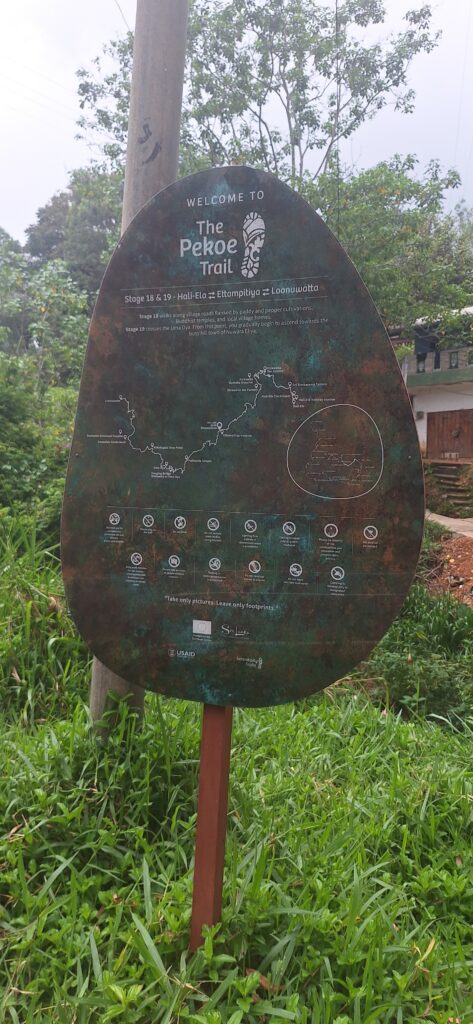
The stages are designed to be doable in one day for non-experienced hikers. But be advised that connecting two stages at a time is not alway a good idea. The heat and humidity really make it hard to push on after 20 kilometers or so. Furthermore you should always try to wake up as early as possible, as the mornings are the only time, where temperatures are still cool and the sun is still behind the mountains. I would advise you hike as many kilometers as you can as early as you can and once the clouds get bigger and bigger you try to end the trail for the day. The weather in this area of Sri Lanka is pretty constant. Mornings are sunny and bright, while afternoon almost always brings strong rain showers. As a rule of thumb, if the sun is completely gone and clouds cover the sky, try to find accomodation or at least a place to shelter from the rail within an hour. If it starts to rain and you are still outside be prepared to get soaked.
Our daily routine looked like this: Get up at 7am, start the trail by 7:30am, hike until around 3-5pm (until the rain begins) and find some accomodation for the next night.
If we were to to it again we would combine stages 16 and 17 on day 1, do stages 18,19 and 20 separatly and combine stages 21 and 22 on the last day.
Accomodation
Finding a place to sleep is not quite easy along some stages. Booking.com does not have many options outside touristy areas and your best bet will be to use a mix of Booking, AirBnB and Google Maps to find accomodation. Here is where I would advise you to stay:
Stage 16: Ella – Demodara
no good accomodations at Demodara, return to Ella via train or continue to Hali Ela
Stage 17: Demodara – Hali Ela
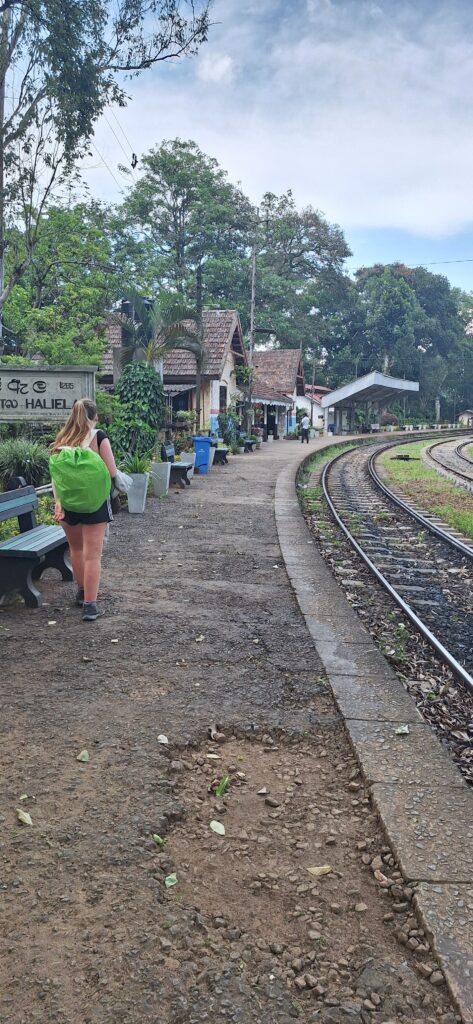
Recently opened in 2025 this accomodation is perfectly located at the end of stage 17 near the train station in Hali-Ela. It has modern amenities and is situated right at the trail.
Stage 18: Hali Ela – Ettampitiya
As there are no real accomodation options in Ettampitiya as of now, your best bet is to walk a couple kilometers further along the trail and then take a small detour up to this accomodation. It looks pretty basic from the outside, but is actually quite comfortable, especially as they have improved the rather run down bed, we had to sleep on. This accomodation has stayed in our minds as it has an incredible view over the valley that you can enjoy from a hammock on your balcony. The owner is also very helpful and organized us Tuk Tuks at local prices as PickMe does rarely work in the countryside. It was funny because we were the second realy guests there and he was also new to hosting guests, but I think if you stay with him you will be in good hands.
Stage 19: Ettampitiya – Loonuwatte
is one of the most peculiar places, we ever stayed in. It is situated on one of the colonial era tea plantations and run by the family owning it. You will stay in a very colonial house and wonder whether you are in Sri Lanka or in England in the 1800s. The owner did make us dinner and breakfast as there are no restaurants around and was very kind. I recommend you stay here for the experience alone
Stage 20: Loonuwatte – Udapussellawa
As we took the bus to Nuwara Eliya and then the train from there back to Ella, I sadly cannot give you first hand experience on accomodation options in Udapussellawa. If you also want to take the bus to Nuwara Eliya, the end of stage 20 is very convenient as it is situated right at the main bus stop of Udapussellawa, where many buses pass by or leave from.
Budget
During our 5 days hiking the Pekoe Trail we spent 51,96€ each on accomodation for 5 nights. In addition to that we spent 57,68€ per person on food, as well as transportation back to Ella at the end. The total comes out to 109,64€ for 5 days, which makes the Pekoe Trail a very affordable option for every one trying to safe some money.
I think this budget is realistic for two people, who can share an accomodation. If you travel alone, you will have to pay about double for the accomodation, as there are no hostels outside Ella and Nuwara Eliya. The further you get from the touristic areas the cheaper it will get. On our day hiking from Ettampitiya to Loonuwatte, we only spent 4,17€ on some snacks and a Tuk Tuk at the place we stayed for the night, as breakfast and dinner were included in the price of the accomodation that day.
If you want to do the trail yourself and still have any questions, feel free to contact me. I am glad to help, as there is not a lot of information online on the trail just yet.
For more posts about my travels feel free to see some of the posts below or visit the main page.
Schreibe einen Kommentar